
10 Reasons Your Range of Motion Isn't Improving (And How to Fix It)
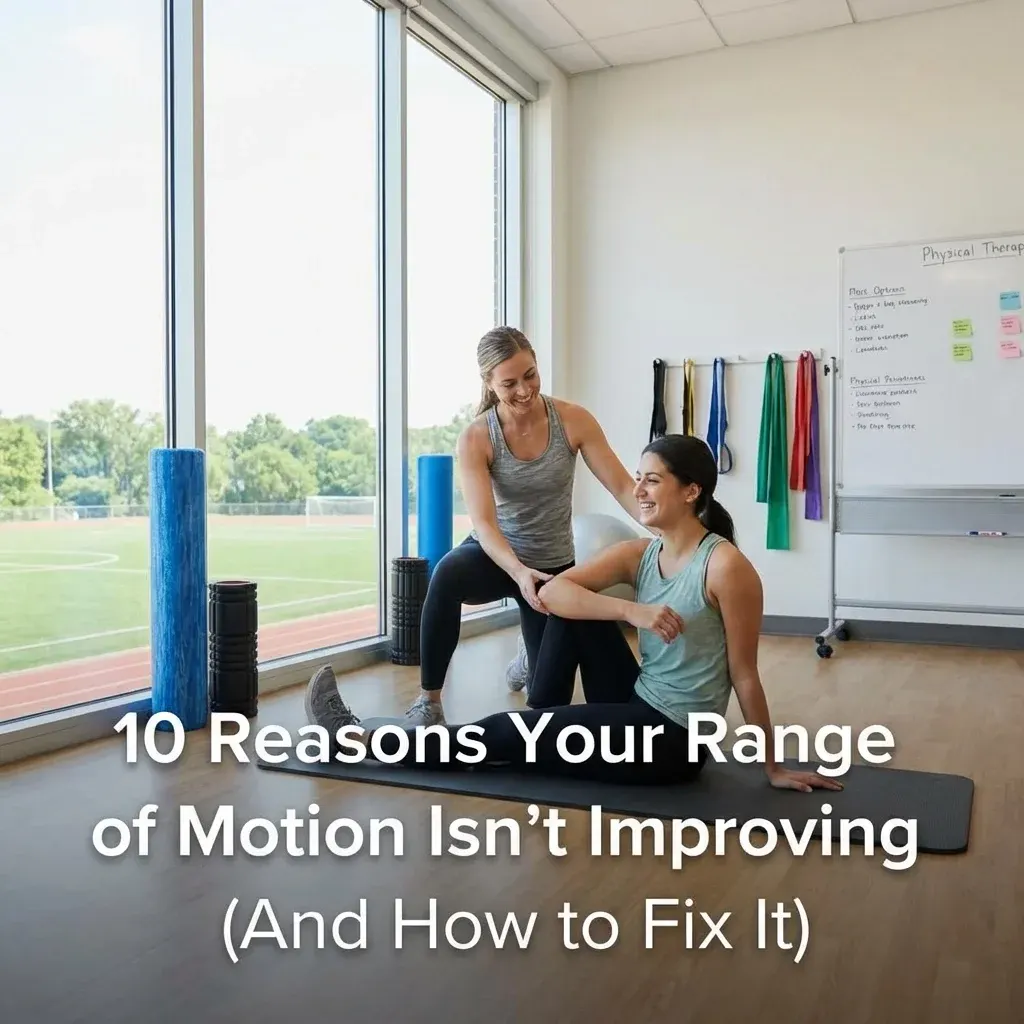
You've done the stretches. You've sat through weeks of physical therapy. You've foam rolled until you're blue in the face. And yet, your shoulder still won't move the way it used to. Your hip still catches. Your back still feels like it's made of concrete.
Sound familiar?
If you're a weekend softball player trying to stay in the game, or you're just tired of feeling stiff every time you get out of bed, you're not alone. Range of motion issues are one of the most frustrating problems because they should be simple to fix: but often aren't.
Here's the thing: the reason your range of motion isn't improving is usually because the real problem hasn't been identified. You're treating the symptom, not the source.
Let's break down the 10 most common reasons your mobility is stuck: and what you can actually do about it.
1. You're Only Doing Passive Stretching
Stretching feels productive. You hold a position, feel the pull, and assume something good is happening. But here's the truth: passive stretching alone is often not enough.
If your limitation is caused by muscle weakness, joint issues, or nervous system guarding, all the stretching in the world won't move the needle. The approach has to match the root cause.
Key takeaway: Stretching is one tool in the toolbox: not the whole toolbox.
2. Your Muscles Are Weak (Not Tight)
This one surprises a lot of people.
When your passive range of motion (someone else moving your limb) is way better than your active range of motion (you moving it yourself), that's a sign of weakness: not tightness.
Your muscles aren't short and stiff. They're weak and can't control the movement through that range. Stretching a weak muscle won't make it stronger. It needs activation and strengthening work.

3. Your Nervous System Is Hitting the Brakes
Your brain is smart. If it senses instability or risk, it will literally lock down your range of motion to protect you. This is called a protective reflex, and it's more common than you'd think.
You might have the physical capability to move further, but your nervous system is saying, "Nope, not safe." This is especially common after injuries or when you've been compensating for a long time.
The fix isn't forcing more range: it's convincing your nervous system that movement is safe.
4. It's a Joint Capsule Problem (Not a Muscle Problem)
If your passive and active range of motion are equally restricted and there's pain at the end range, the issue likely isn't muscular. It's the joint capsule or deeper structures.
Think of it like a door that can only open so far because of the hinge: not because something's blocking it. Stretching the muscles around that joint won't change the hinge itself.
This requires a more targeted approach that addresses the joint directly.
5. You Sit Too Much
I know, I know. You've heard this before. But it's worth repeating because prolonged sitting is absolutely wrecking your mobility.
When you spend 8+ hours a day in a hunched position, your joints lose pliability. Your hip flexors shorten. Your thoracic spine rounds. And over time, your body accepts this as the new normal.
If you're not actively counteracting your desk job, your range of motion will continue to decline: regardless of how many stretches you do on the weekend.
6. Age-Related Changes Are Catching Up
Let's be real: as you get older, your joints naturally become less pliable. Cartilage thins. Synovial fluid decreases. Things just don't move as smoothly as they used to.
This doesn't mean you're doomed. It means you need a smarter approach: one that accounts for where your body is now, not where it was 20 years ago.

7. An Old Injury Never Fully Healed
That shoulder you "tweaked" five years ago? The hamstring strain you pushed through? Old injuries that weren't properly addressed often come back to haunt you in the form of limited range of motion.
Scar tissue builds up. Compensation patterns develop. And before you know it, you've got chronic stiffness that no amount of stretching seems to touch.
If you've got a lingering injury that never quite resolved, that's probably where your mobility problem started.
8. You're Dealing with Inflammation
Inflammation from overuse, infection, or chronic conditions creates tension and stiffness throughout your body. Your joints feel "sticky." Your muscles feel heavy.
If you've noticed your range of motion getting worse alongside other symptoms: fatigue, swelling, general achiness: there may be an inflammatory component that needs to be addressed.
9. There's Structural Damage
Cartilage tears. Meniscus issues. Labrum damage. These structural problems physically limit how far a joint can move.
If you've got pain, clicking, or catching along with your limited range, it's worth getting evaluated to rule out structural damage. Pushing through these issues without knowing what's going on can make things significantly worse.
10. Compensation Patterns Have Taken Over
This is the big one: and it's what we see all the time at Major League Activation.
When one muscle isn't doing its job properly, other muscles step in to compensate. Over time, these compensation patterns become deeply ingrained. Your body "forgets" how to move correctly.
You might have full range of motion in theory, but your body has learned to move around the limitation instead of through it. Until you address the compensation pattern, your range of motion will stay stuck.

So How Do You Actually Fix It?
Here's where things get practical.
Step 1: Figure Out What Type of Limitation You Have
Is your passive range way better than your active range? That's a weakness problem.
Are they both equally limited with pain? That's likely a joint or structural issue.
Does your range improve temporarily but never stick? Your nervous system might be the bottleneck.
The right diagnosis determines the right treatment.
Step 2: Address the Nervous System
This is where techniques like Muscle Activation Technique (MAT) shine. Instead of forcing more range, MAT identifies which muscles aren't firing correctly and "wakes them up."
When your nervous system trusts that your muscles can control a movement, it releases the brakes. Range of motion can improve: and is more likely to stick.
In my view, this is a missing piece for many people who've "tried everything." Traditional PT often focuses on the tight or painful area. MAT focuses on why that area is tight or painful in the first place.
Step 3: Use Technology That Works With Your Body
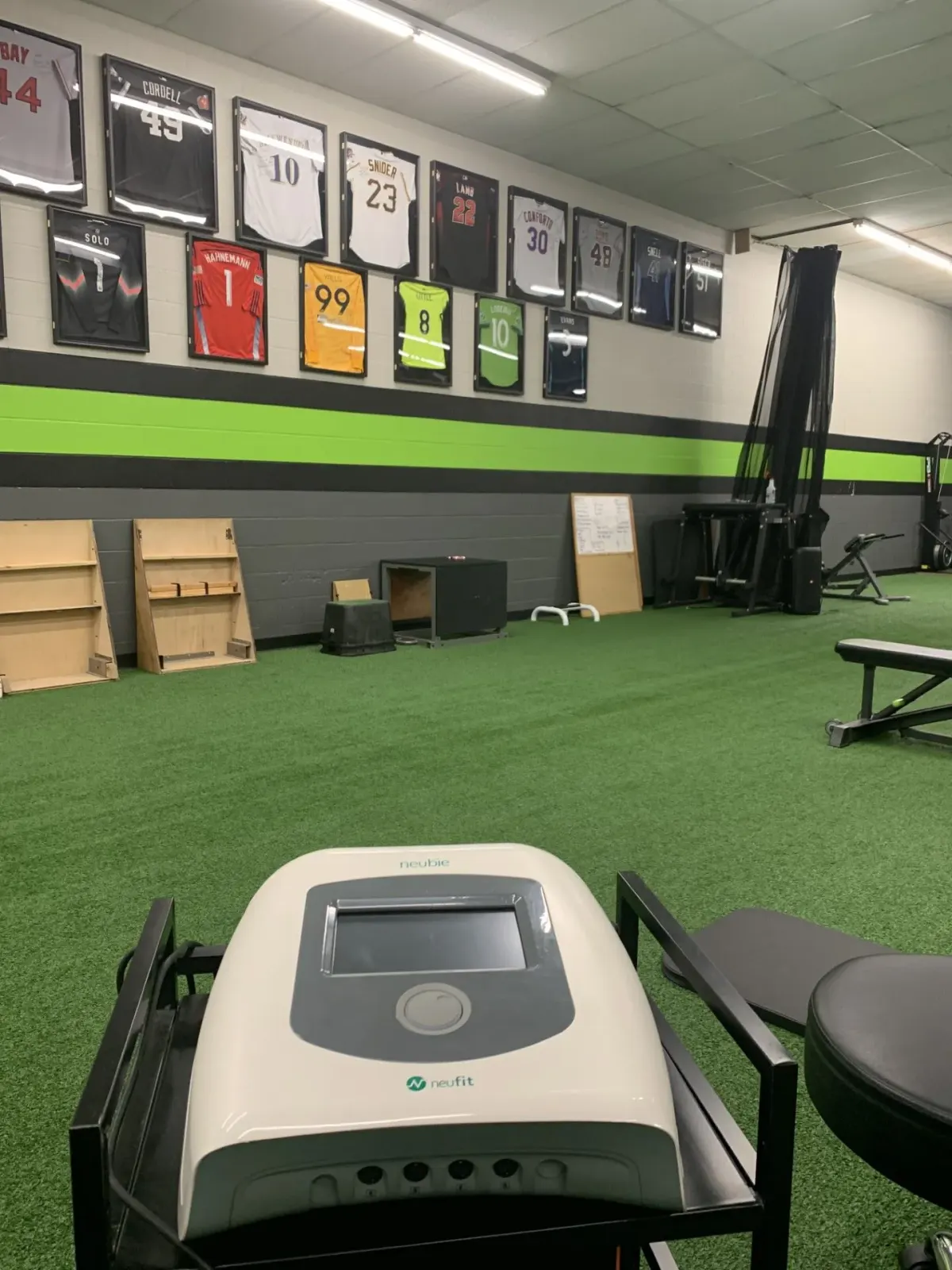
The Neubie device uses targeted electrical stimulation to help your nervous system re-learn movement patterns. It's not the kind of e-stim you might've tried at a PT clinic: this is a completely different approach designed to address the neurological component of movement.
Combined with MAT, it's designed to help address plateaus that stretching and traditional rehab may not.
Step 4: Get a Customized Plan
Cookie-cutter programs don't work for range of motion issues. Your body, your history, and your compensation patterns are unique to you.
At Major League Activation, we use the same approach we've used with professional baseball players: because you deserve pro-level care, whether you're throwing 95 mph or just trying to throw batting practice to your kid without pain.
Ready to Finally Make Progress?
If you've been stuck in a cycle of stretching, PT, and frustration, it might be time for a different approach. One that looks at the whole picture: your muscles, your nervous system, your movement patterns: and builds a plan around what YOUR body actually needs.
Call or text (360) 836-0107 to set up a time. We'll figure out what's really going on and work on getting you moving better.
You can also check out our shoulder program if arm and shoulder mobility is your main concern, or read more about how we approach shoulder tightness in baseball players.
Your body wants to move well. Sometimes it just needs a little help remembering how.
Individual results vary. This article is for educational purposes and is not medical advice. Talk with a qualified medical professional about your specific situation.