
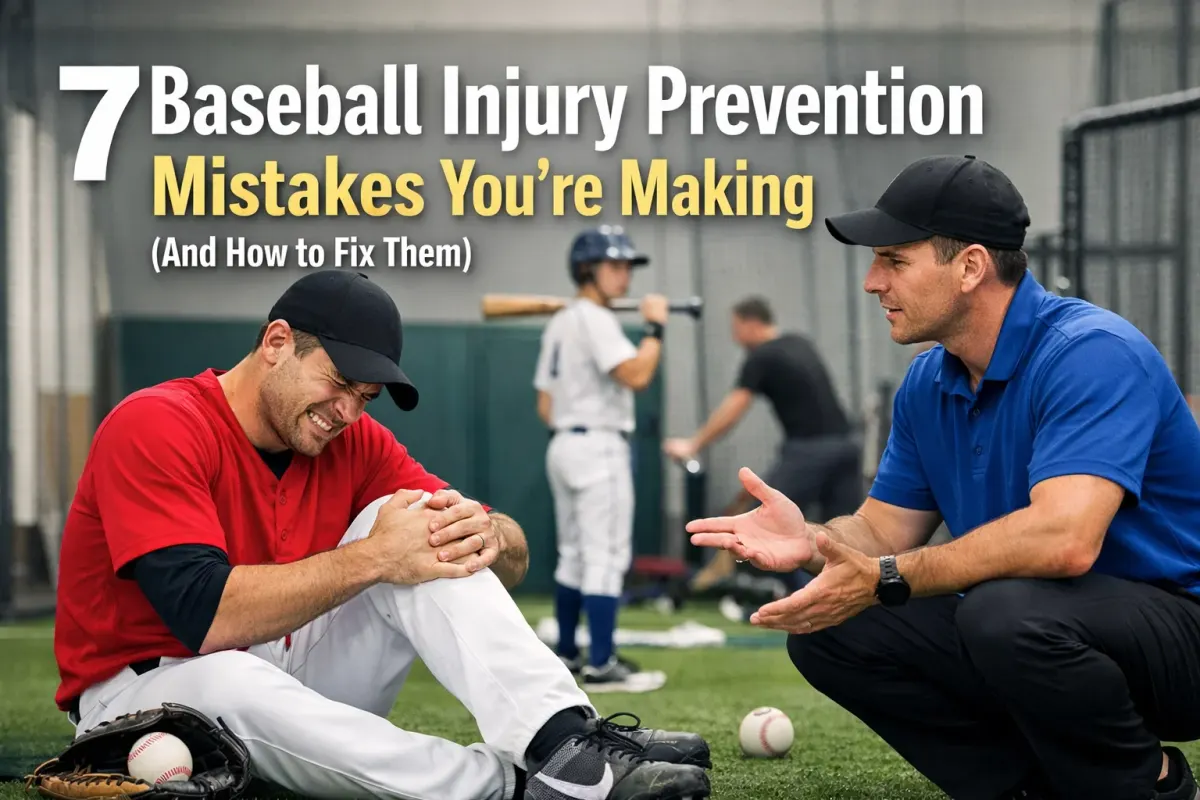
7 Baseball Injury Prevention Mistakes You’re Making (And How to Fix Them)
If you're a baseball player, parent, or coach, you've probably spent plenty of time thinking about injury prevention. Maybe you've implemented stretching routines, monitored pitch counts, or invested in private lessons. But here's the thing: despite all that effort, shoulder and elbow injuries keep happening at alarming rates.
Why?
Because most of the "injury prevention" advice floating around misses the mark entirely. It's not that these approaches are wrong, they're just incomplete. And when you're dealing with the demanding mechanics of throwing a baseball, incomplete strategies leave you vulnerable.
After years of working with pro baseball players and now bringing that same level of care to athletes at every level, I've seen these mistakes play out over and over again. The good news? They're all fixable. Let's break down the seven biggest mistakes you're making and what you should be doing instead.
Mistake #1: Over-Focusing on Stretching Without Muscle Activation
Walk into any baseball facility and you'll see players stretching. Arm circles, shoulder stretches, band work, all good stuff, right? Not if your muscles aren't actually firing correctly.
Here's what most people don't understand: range of motion problems aren't always flexibility problems. Often, they're muscle activation problems. When a muscle isn't communicating properly with your nervous system, your body compensates by tightening up other areas. You can stretch all day long, but if the root issue is poor muscle activation, you're just spinning your wheels.
This is where Muscle Activation Technique (MAT) changes the game. Instead of assuming tight muscles just need more stretching, MAT assesses whether your muscles are actually turning on when they're supposed to. When we identify and address these activation issues, range of motion can improve, not because we stretched anything, but because the work focuses on proper muscle function.
The Fix: Before you assume you need more flexibility work, get your muscle activation assessed. When your muscles fire correctly, your body doesn't need to create those protective compensation patterns that limit your mobility.

Mistake #2: Ignoring Compensation Patterns
Let's say your right hip doesn't extend properly. Your body is smart, it'll figure out a way to complete your pitching motion anyway. Maybe your lower back will hyperextend to make up the difference, or your shoulder will work overtime to generate the power your hip should be providing.
Congratulations, you just developed a compensation pattern. And that compensation is probably what's going to get you hurt, not the original limitation.
Most traditional approaches to injury prevention focus on where you feel pain or tightness. But the area that hurts is rarely the source of the problem, it's just the area that's been working too hard to compensate for something else that's not doing its job.
In pro baseball, we don't just chase symptoms. We track down the root cause. That tight shoulder? It might actually be a hip mobility issue. That elbow pain? Could be traced back to poor core stability or a weak glute.
The Fix: Stop chasing symptoms and start identifying compensation patterns. This requires a comprehensive assessment that looks at your entire kinetic chain, not just the body part that hurts. Addressing the root cause can help the symptoms ease.

Mistake #3: Using Generic Warm-Up Protocols
"Just stretch and throw some easy tosses" might work for recreational softball, but it's not going to cut it for serious baseball players. Yet I see generic warm-up routines all the time, the same protocol for every player, regardless of their individual needs or limitations.
Your teammate might need to work on thoracic spine mobility before throwing. You might need to activate your serratus anterior and improve scapular control. The kid in the bullpen might have hip internal rotation restrictions that need addressing. One-size-fits-all warm-ups miss all of this.
The Fix: Your warm-up should be individualized based on your specific movement limitations and compensation patterns. This means starting with targeted muscle activation work, addressing your unique mobility restrictions, and progressively preparing your body for the specific demands of throwing.
Think of it like this: you wouldn't use the same pre-game batting practice routine as everyone else if you're working on a specific mechanical adjustment, right? Why would you use the same warm-up routine?
Mistake #4: Playing Through Pain
"Tough it out." "No pain, no gain." "Winners play hurt."
Let's be clear: these are terrible philosophies when it comes to throwing-related pain. Pain is your body's check engine light, and ignoring it doesn't make you tough, it makes you injured.
I've worked with enough professional athletes to know that the difference between the players who have long careers and the ones who flame out isn't toughness. It's intelligence. The smart players address issues early when they're small, manageable problems. The players who push through pain end up with big, career-threatening problems.
The Fix: If you have pain when you throw, you need to stop throwing and figure out why. Not next week. Not after this weekend's tournament. Now.
And here's the key: pain doesn't always mean you need complete rest. Often, it means you need to restore proper movement patterns and muscle activation. Sometimes players can continue training while we address the underlying issue, but only if we're actually addressing the root cause, not just masking symptoms with ice and ibuprofen.
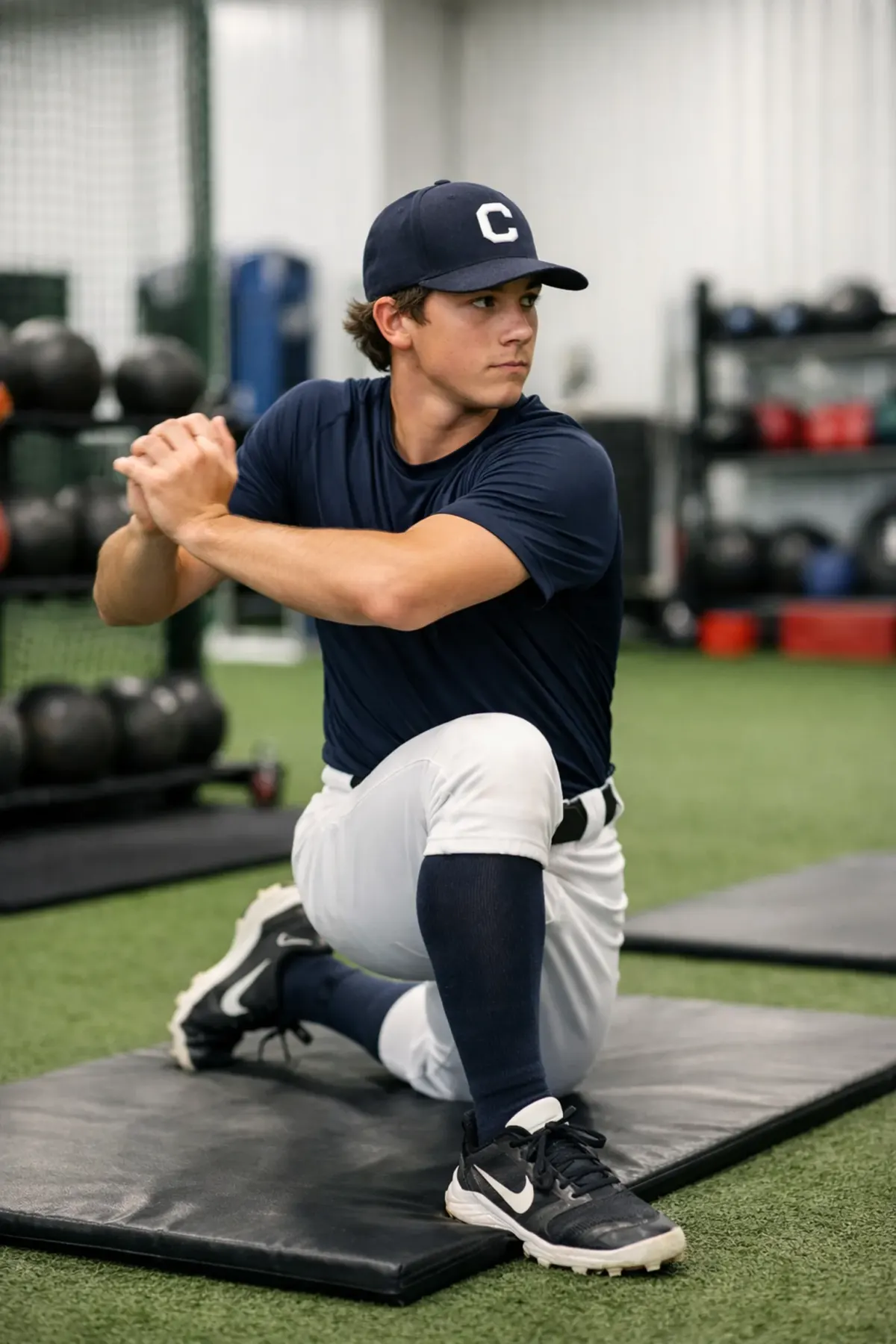
Mistake #5: Year-Round Throwing Without Strategic Rest
Baseball has become a 12-month sport, and it's destroying arms. Your body needs time to recover and rebuild, but if you're playing travel ball in the fall, showcases in the winter, high school ball in the spring, and summer tournaments… when exactly does that happen?
The soft tissues in your shoulder and elbow need time to heal completely. Ligaments need time to recover. Your nervous system needs a break. Without adequate rest periods, you're essentially building your training on a foundation of accumulated fatigue and micro-trauma.
The Fix: Build strategic rest periods into your year. This doesn't mean sitting on the couch, it means periods where you're not throwing competitively and can focus on rebuilding your foundation of strength, mobility, and proper movement patterns.
Think of it like this: pro baseball players get an offseason for a reason. If major leaguers need time away from throwing, what makes you think your 15-year-old doesn't?
Mistake #6: Accepting "That's Just Your Mechanics" Without Deeper Investigation
A pitching coach tells you that your arm drag is just part of your delivery. A trainer says your lack of hip rotation is just how you're built. A doctor tells you some people's shoulders are just tight.
But what if none of that is true?
What if your arm drag is actually caused by poor muscle activation in your rotator cuff? What if your hip rotation limitation is due to compensation patterns from an old ankle sprain? What if your shoulder tightness is your body's protective response to instability somewhere else?
In my experience working with pro athletes, very few limitations are just "how someone is built." Most limitations are the result of dysfunction that can be addressed, but only if you're looking at the right things.
The Fix: Don't accept limitations as permanent features of your body until you've had a comprehensive assessment that looks at muscle activation, compensation patterns, and neurological control. The approach we use with professional baseball players is designed to identify and address issues that traditional methods may miss.

Mistake #7: Following Generic Injury Prevention Programs Instead of Individualized Care
The internet is full of "must-do" exercises for baseball players. Shoulder programs. Elbow protocols. Core routines. And sure, some of these exercises are fine for some players. But they're not fine for all players.
If your serratus anterior doesn't activate properly, adding a bunch of band exercises might just reinforce your compensation patterns. If you have a rib that's not moving correctly, all the core work in the world won't fix your rotational power. If your nervous system isn't properly controlling your shoulder blade, strengthening exercises might actually make things worse.
This is exactly why the one-size-fits-all approach fails. Your body isn't generic, so why would your training be?
The Fix: Get individualized care that addresses your specific limitations and compensation patterns. This starts with a proper assessment, not just of your strength, but of your muscle activation, movement quality, and nervous system control.
The same principles we use with professional baseball players can be applied to athletes at every level. It's not about fancy equipment or secret exercises. It's about identifying what YOUR body needs and creating a plan that addresses those specific issues.
The Bottom Line
Injury prevention in baseball isn't rocket science, but it does require a more sophisticated approach than most players, parents, and coaches are currently using. You can't prevent injuries you don't understand, and you can't fix problems you haven't properly identified.
The good news? When you address muscle activation issues, identify compensation patterns, and create individualized strategies based on how your body actually moves, many athletes notice a difference. Range of motion can improve. Performance can improve. And injury risk may go down.
This is the same approach used with professional baseball players to support their health and performance. And it can be applied to high school players, college athletes, and anyone else who wants to throw a baseball without getting hurt.
Ready to stop making these mistakes and start training smarter? Call or text (360) 836-0107 to set up a time. Let's figure out what YOUR body needs: not what some generic program thinks every baseball player needs.
Because at the end of the day, the best injury prevention strategy isn't about doing more exercises or following stricter protocols. It's about understanding your individual limitations, addressing the root causes of dysfunction, and training in a way that actually makes sense for your body.
That's not complicated. It's just different from what most people are doing. And different is exactly what you need if you want different results.
Individual results vary. This article is for educational purposes and is not medical advice. Talk with a qualified medical professional about your specific situation.