
Are Compensation Patterns Destroying Your Athletic Performance? Here's the Truth
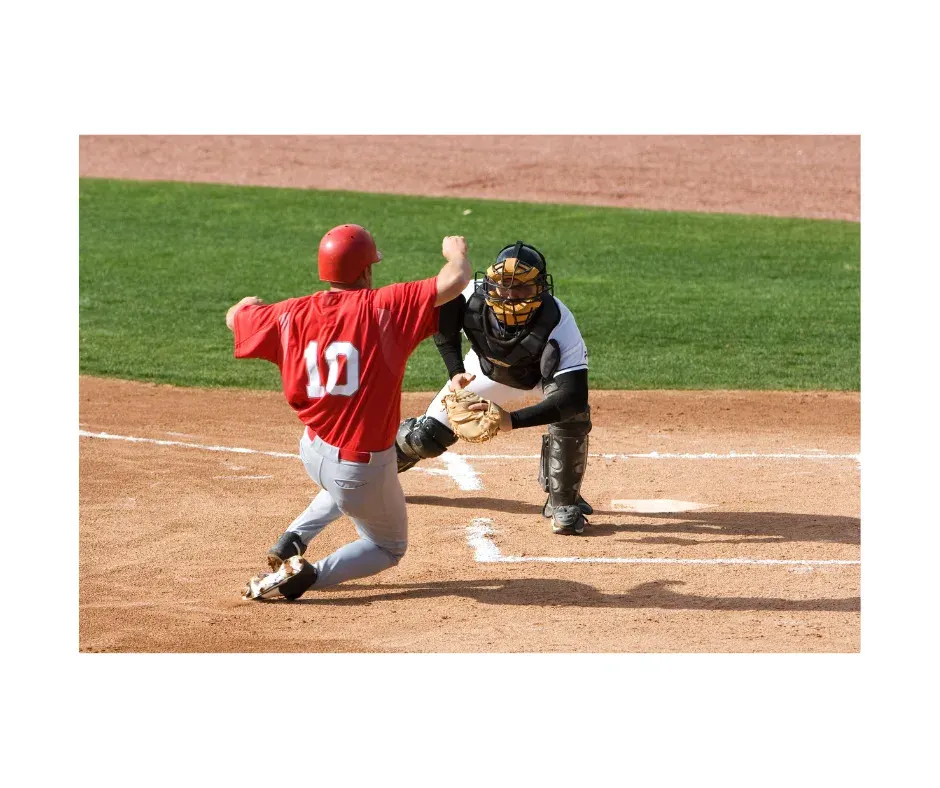

Have you ever wondered why your swing feels "off" even though you've been training harder than ever? Or why that nagging hip tightness keeps coming back no matter how much you stretch?
Here's the truth: your body might be lying to you.
Not intentionally, of course. But when something isn't working right: a weak muscle, an old injury, a joint that doesn't move like it should: your body gets creative. It finds workarounds. These workarounds are called compensation patterns, and they might be the biggest thing standing between you and your best performance.
What Exactly Are Compensation Patterns?
Think of your body like a well-oiled machine. Every muscle, joint, and movement is supposed to work together in a coordinated sequence called the kinetic chain. When everything fires in the right order, you get smooth, powerful, efficient movement.
But what happens when one link in that chain isn't pulling its weight?
Your body doesn't just stop working. Instead, it recruits other muscles to pick up the slack. A weak glute? Your lower back takes over. Tight hip flexors? Your hamstrings compensate. Shoulder instability? Your rotator cuff muscles work overtime.
The problem isn't that compensation patterns don't work: it's that they work just well enough to mask the real issue while creating new ones.
The Hidden Cost of "Making It Work"
Here's where things get tricky. Compensation patterns are sneaky. You might not even know you have them because your body has adapted so well. But that adaptation comes at a serious cost:
Energy Leaks: When muscles fire out of sequence or the wrong muscles do the work, you lose power. It's like trying to throw a baseball with a garden hose instead of a fire hose: sure, water comes out, but not with the force you need.
Accelerated Fatigue: Those compensating muscles weren't designed for that job. They tire out faster, which is why your mechanics might fall apart in the late innings or the fourth quarter.
Reduced Range of Motion: Over time, compensation patterns cause certain tissues to tighten up while others get overstretched. This progressively limits your mobility and makes the original problem even worse.
Increased Injury Risk: This is the big one. When muscles and joints take on loads they weren't designed for, something eventually gives. That "random" hamstring strain or shoulder flare-up? Probably not random at all.
The Domino Effect You Can't Ignore
In my view, the most frustrating thing about compensation patterns is how they multiply. One dysfunction leads to another, which leads to another: like toppling dominoes.
Let's say you're a baseball player with weak hip abductors. Your body compensates by creating excessive hip sway when you rotate. That sway forces your trunk to lean laterally to maintain balance. Now your core is working overtime, your shoulder has to adjust its angle, and suddenly your entire throwing mechanics are compromised.
All because of one weak muscle group.
And here's the kicker: you might never reach your true potential even if you avoid injury. Compensation patterns prevent optimal improvement because they keep you locked into inefficient movement strategies. You're working harder, not smarter.

5 Self-Checks to Spot Compensation Patterns
Before you panic, let's do some detective work. Here are five quick assessments you can do right now to identify potential compensation patterns:
1. The Single-Leg Balance Test (30 seconds each side)
Stand on one leg with your eyes closed. Can you hold it for 30 seconds without significant wobbling or putting your foot down? If one side is noticeably worse, you've likely got hip stability compensation happening.
2. The Overhead Squat Check
Stand in front of a mirror and squat with your arms overhead. Watch for:
- Knees caving inward
- Feet turning out excessively
- Lower back arching
- Arms falling forward
Any of these indicate your body is finding workarounds for mobility or stability deficits.
3. The Hip Hinge Test
Hinge at your hips like you're picking something up off the floor. Does your lower back round immediately? Can you feel the stretch in your hamstrings, or does it all go to your back? If your back takes over, your glutes and hamstrings aren't doing their job.
4. The Shoulder Flexion Screen
Lie on your back and raise both arms overhead toward the floor. Can you touch the ground without arching your lower back? If your back has to arch, your lats and thoracic spine are compensating for limited shoulder mobility.
5. The Rotation Comparison
Rotate your torso to the left, then to the right. Is one side significantly tighter or more limited? Asymmetries here often show up as compensation patterns in throwing, swinging, or any rotational sport.
Red flag: If you noticed issues on multiple tests, compensation patterns are likely affecting your performance more than you realize.
Why Stretching and Strengthening Alone Won't Fix This
Here's something most athletes don't understand: you can't stretch or strengthen your way out of a compensation pattern if you don't address the root cause first.
Why? Because your nervous system has learned that pattern. It's become the default. Your brain thinks that's how you're supposed to move.
This is where things like Muscle Activation Technique (MAT) come in. MAT identifies which muscles aren't communicating properly with your nervous system and "wakes them up." Once those muscles are firing correctly, your body may be able to stop compensating.
Think of it like this: if your car's alignment is off, you can grip the steering wheel harder to drive straight, but you're just fighting the problem. Fix the alignment, and suddenly driving becomes effortless.
How MAT and Neubie Work Together to Break the Cycle
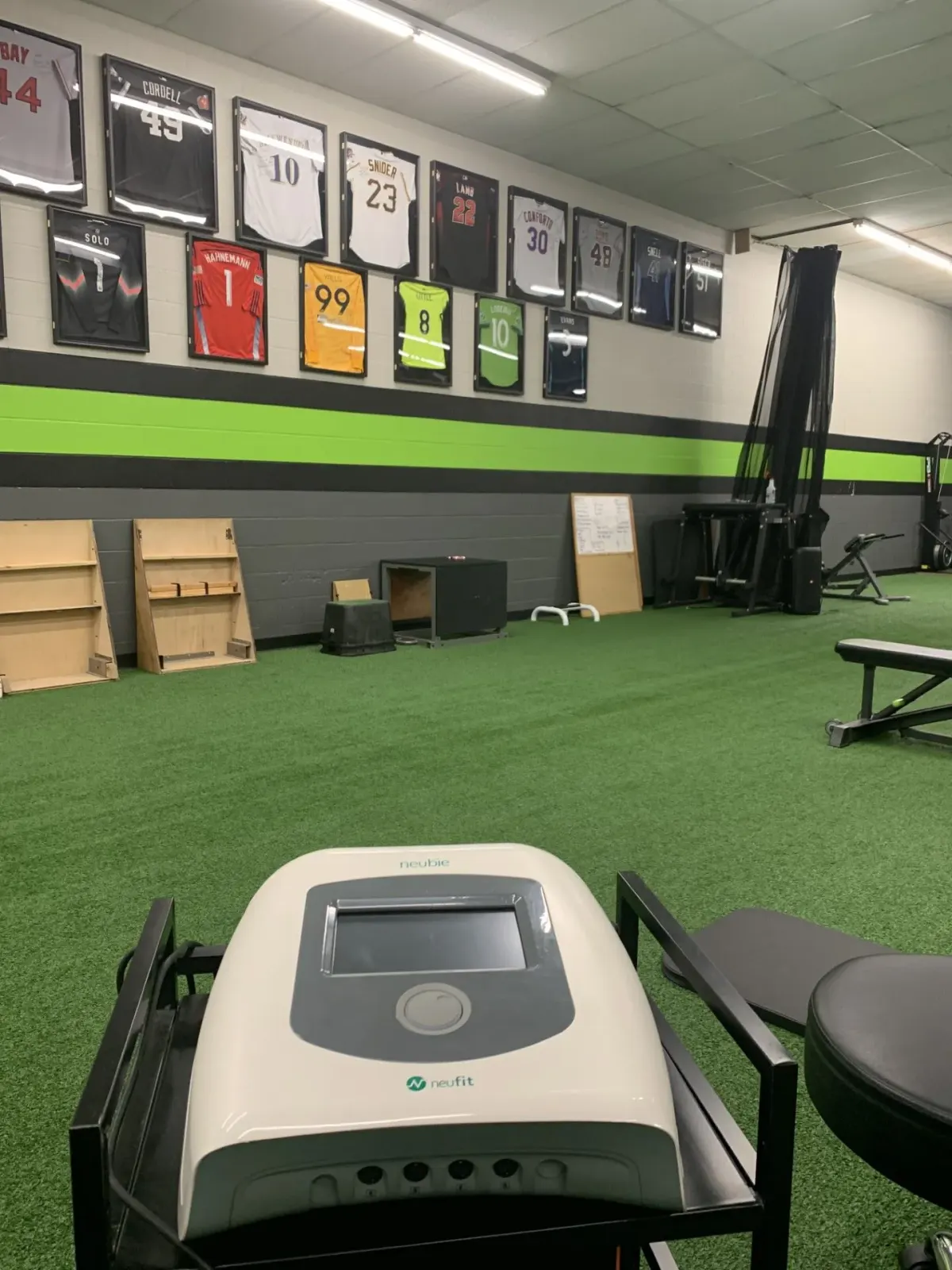
At Major League Activation, we combine MAT with Neubie electrical stimulation to attack compensation patterns from multiple angles.
MAT addresses the software problem: the communication breakdown between your brain and muscles. Through precise testing, we identify exactly which muscles have "checked out" and use targeted techniques aimed at restoring proper neurological function.
Neubie addresses the hardware problem: it uses direct current stimulation designed to re-educate your nervous system and support recovery of damaged or dysfunctional tissue. Unlike traditional e-stim that just masks symptoms, Neubie is designed to help your body learn new, more efficient movement patterns.
Together, they create a powerful one-two punch:
- Identify the weak links causing compensation
- Activate the muscles that have shut down
- Re-pattern your nervous system to use them correctly
- Strengthen the new, efficient movement patterns
The goal? To stop working around problems and start addressing them.
What to Expect When You Address Compensation Patterns
Let me be real with you: this isn't a one-session fix. Compensation patterns took months or years to develop, and unwinding them takes time and consistency.
That said, many athletes notice something different early on. Maybe it's a movement that suddenly feels easier, or a muscle you can finally feel engaging. Those small wins stack up.
Over several weeks, many athletes notice:
- Improved range of motion without forcing it
- Better balance and stability
- More consistent mechanics (especially late in games)
- Reduced tightness and nagging discomfort
- Movements that feel more natural and powerful
If you've been dealing with chronic tightness or performance plateaus that don't make sense, compensation patterns are worth investigating.

Ready to Find Out What's Really Going On?
If you're tired of band-aid solutions and ready to get to the root of what's holding you back, let's talk. We'll do a thorough assessment, identify your specific compensation patterns, and build a plan to address them.
Call or text (360) 836-0107 to set up a time.
Your body has been working around problems for long enough. It's time to actually address them.
Individual results vary. This article is for educational purposes and is not medical advice. Talk with a qualified medical professional about your specific situation.