
Beyond the Pitch Count: The Real Secret to Youth Baseball Longevity
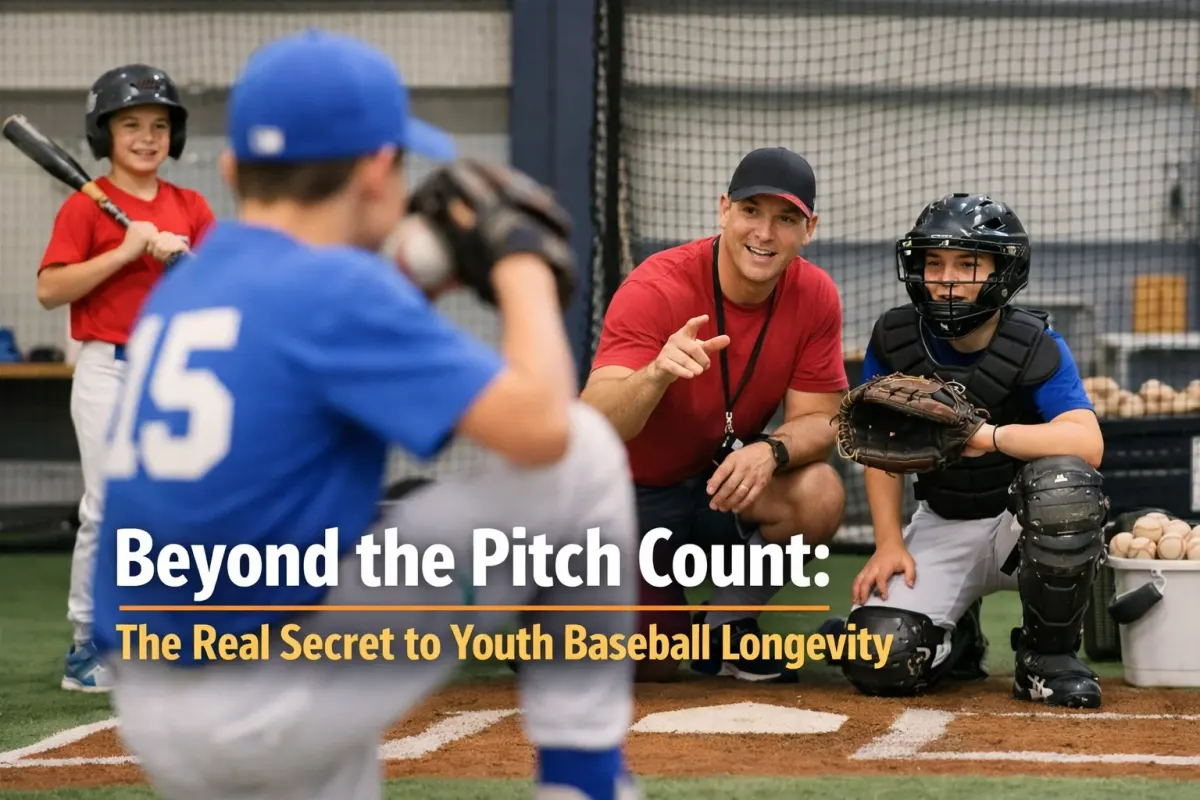
If you're a parent or coach tracking pitch counts like your life depends on it, I get it. You're doing everything right: logging every throw, enforcing the 85-pitch limit (MLB Pitch Smart), making sure your 12-year-old doesn't throw a curveball yet. But here's the hard truth: pitch counts alone won't keep your young player healthy for the long haul.
I see it every season in our clinic. Kids who stayed within their pitch count guidelines but still end up with elbow pain, shoulder issues, or that dreaded "something just doesn't feel right" complaint. Why? Because baseball injury prevention for youth athletes requires way more than counting pitches.
Let me walk you through what actually keeps young arms healthy: and what most travel ball programs are getting wrong.
The Extended Rest Problem Nobody Talks About
Sure, your son gets 4 days rest between outings. That's great. But when's the last time he took real time off from throwing?
Here's what MLB's Pitch Smart guidelines recommend for 9- to 12-year-olds: at least 4 months off from throwing every year, with at least 2-3 of those months in a row (MLB Pitch Smart, ages 9-12). Not "light catch." Not "just playing catch in the backyard." Zero throwing.

Why does this matter so much? One study of MLB pitchers found that those who played high school baseball in warm-weather areas, where year-round throwing is common, had Tommy John (UCL) surgery at a significantly higher rate than pitchers from cold-weather areas (Erickson et al., 2014). Your body needs actual recovery time to repair microscopic tissue damage that accumulates over a season.
The real question isn't "How many pitches per game?" It's "How many months per year is your kid throwing?"
If the answer is 11 or 12 months, we need to talk.
The Multi-Sport Advantage
I know, I know: your kid's travel coach says if he doesn't play year-round, he'll fall behind. Here's what actually happens when young athletes specialize early: their injury risk goes up, not down.
Multi-sport participation builds better overall athletes. Basketball develops different movement patterns. Soccer builds endurance and footwork. Even swimming can improve shoulder stability through different ranges of motion than throwing creates.
The best youth players I've worked with? Most of them played 2-3 sports until high school. They developed better body awareness, more diverse athletic skills, and significantly fewer overuse injuries.
Strength Training That Actually Prevents Injuries
Let's get specific about what "strength and conditioning" really means for youth baseball players. It's not about getting huge or throwing harder tomorrow. It's about building a foundation that supports the explosive, repetitive demands of baseball.
Lower body strength through squats and lunges isn't just for batting power: it's the foundation of every pitch. Your legs drive the energy that eventually releases through your arm. Weak legs? Your arm compensates.
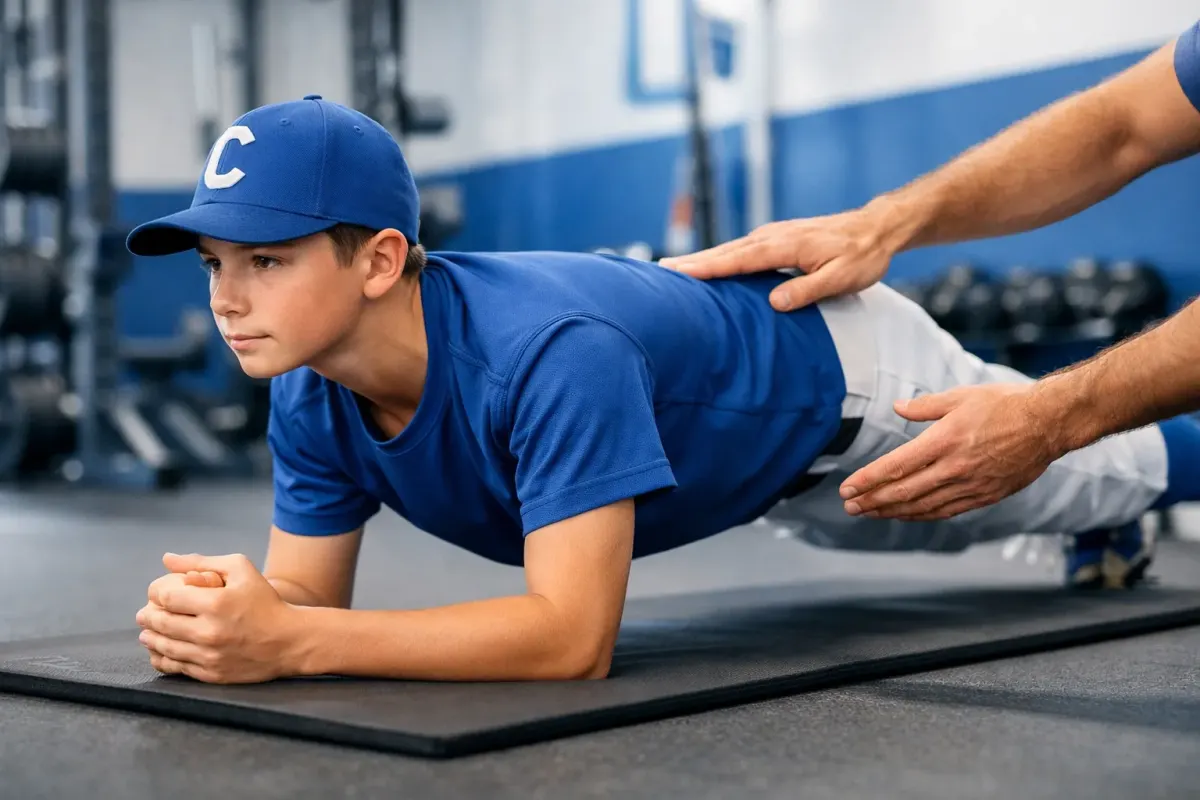
Core strength via planks and rotational exercises creates the stable platform your shoulder needs. A strong core means less stress transferred to your elbow and shoulder with every throw.

Upper body stability through controlled shoulder exercises (not just throwing harder) reduces injury risk by ensuring your muscles are activating in the right sequence. This is where Muscle Activation Technique can help: it is designed to identify which muscles aren't firing correctly so they can be addressed early.
Movement Quality Over Volume
Here's where most youth programs miss the boat entirely. They focus on how much a kid throws without ever assessing how well they move.
Does your young pitcher have adequate hip mobility for their delivery? Can they achieve the shoulder range of motion their mechanics demand? Are their muscles activating in the proper sequence, or are they compensating without anyone noticing?
These movement imbalances don't show up on a pitch count chart. But they absolutely show up in injury rates.
At Major League Activation, we use MAT to assess exactly which muscles aren't activating properly. Not stretching: actual muscle activation work that aims to improve range of motion by addressing the underlying neuromuscular function. When a 14-year-old can't externally rotate their shoulder adequately, that's not a flexibility problem. It's an activation problem, and it needs to be addressed before it becomes an injury.
The Diamond Arm Lab Solution
So how do you actually track all of this for your young athlete? Pitch counts, rest days, strength training, movement quality, even hydration and sleep?
That's exactly why we developed The Diamond Arm Lab app. It's customized arm care programming meets practical workload management: all designed specifically for baseball players.
Instead of just logging pitch counts, you can track:
- Extended rest periods and off-seasons
- Strength training completion
- Movement quality assessments
- Arm care routines
- Recovery metrics
Think of it as your comprehensive workload dashboard. You can see how your player's workload is trending, whether they're skipping recovery work, and how their movement assessments change over time.
The 12-Month Commitment Advantage
Here's something most parents don't realize: players who commit to at least 12 months of proper training and development can see improvements that build on each other, not just linear gains.
Why 12 months? Because that's a complete training cycle: offseason development, preseason preparation, in-season maintenance, and transition period recovery. Each phase builds on the previous one. Skip any phase or compress the timeline, and you're leaving massive potential on the table while increasing injury risk.
This timeline allows for proper skill mastery, physical development across multiple training cycles, and the kind of sustainable improvement that actually leads to college and professional opportunities.
Sleep, Nutrition, and Recovery (The Unglamorous Stuff)
Nobody wants to hear that their 13-year-old needs 8-10 hours of sleep a night (American Academy of Sleep Medicine) and proper nutrition. But peak performance: and injury prevention: absolutely depends on these basics.
Tissue repair happens during sleep. Muscle growth requires adequate protein. Hydration affects everything from cognitive function to tendon elasticity. These aren't optional extras for serious athletes: they're fundamental requirements.
If your young player is staying up until 11 PM on screens, eating fast food after practice, and barely drinking water, no amount of pitch count management will keep them healthy.
Building Mental Resilience
There's one more piece most programs completely ignore: mental development and resilience.
Players who view challenges as opportunities for improvement, who maintain focus on the present moment, and who have learned to manage competitive pressure are significantly better equipped to handle the demands of sustained athletic development.
This isn't touchy-feely stuff. Mental resilience directly affects physical performance and injury prevention. Anxious players develop tension patterns that alter mechanics. Players who catastrophize every minor discomfort often shut down before actual injury occurs: or push through actual injuries they should report.
What This Looks Like in Practice
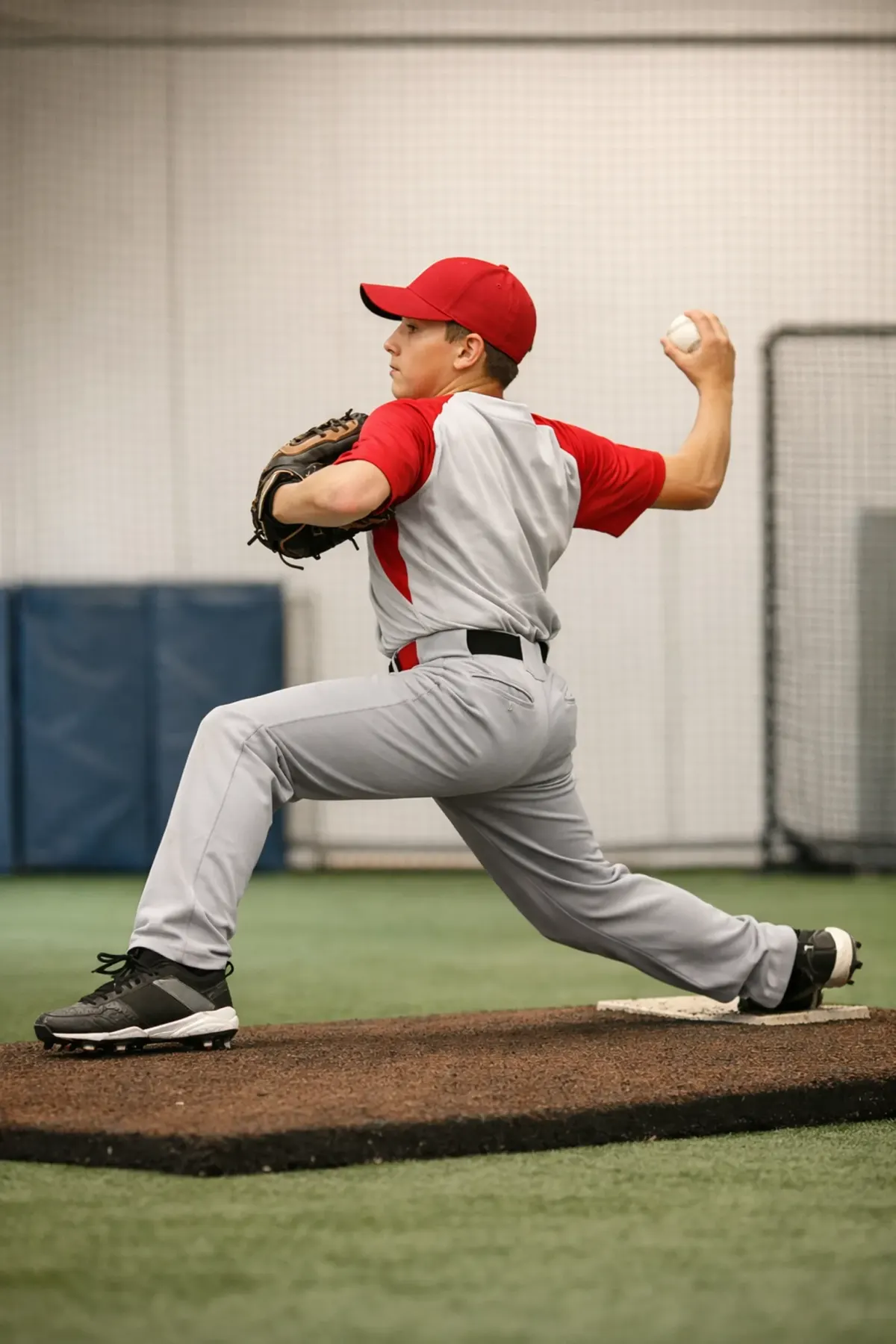
So what does comprehensive youth baseball injury prevention actually look like day-to-day?
Off-season (typically 2-3 months):
- Complete break from throwing (Pitch Smart recommends at least 2-3 continuous months off for ages 9-12)
- Focus on strength and conditioning foundation
- Participation in other sports
- Movement quality assessment and correction
Pre-season (6-8 weeks):
- Gradual return to throwing with structured program
- Continued strength training with baseball-specific emphasis
- Mobility and activation work 3-4x per week
- Mental skills training
In-season:
- Pitch count adherence (obviously)
- Maintenance strength training
- Daily arm care and activation routines
- Recovery prioritization between outings
- Ongoing movement quality monitoring
Transition period (2-4 weeks):
- Active recovery and reduced intensity
- Address any minor issues before they become major
- Assessment and planning for off-season
This isn't complicated, but it does require consistency and commitment: from players, parents, and coaches.
The Bottom Line
Pitch counts matter. But they're just one piece of a much bigger puzzle. The real secret to youth baseball longevity combines extended rest periods, multi-sport participation, comprehensive strength training, movement quality assessment, proper recovery, and mental development.
Most importantly, it requires actually tracking and managing all these variables: which is nearly impossible with a spreadsheet and good intentions.
That's where The Diamond Arm Lab comes in. Whether you're a parent trying to keep your kid healthy or a coach managing an entire team, having a systematic way to track workload and arm care makes all of this much easier to manage.
Want to see how we can help your young athlete build a foundation for long-term success? Call or text (360) 836-0107 to set up a time. We'll start with a comprehensive movement assessment using MAT to look for movement issues worth addressing early.
Because your player deserves more than just pitch count management. They deserve a real plan for staying healthy, getting better, and actually enjoying this game for years to come.
Individual results vary. This article is for educational purposes and is not medical advice. Talk with a qualified medical professional about your specific situation.