
Beyond the Radar Gun: The 3 Metrics Every High School Pitcher Should Actually Care About
Ever walked past a showcase event and noticed every single parent staring at the radar gun like it holds the secrets to their kid's future? You're not alone. The obsession with velocity has turned high school baseball into a speed contest: and it's hurting more young arms than it's helping.
Here's the truth: throwing hard is great, but it's only one piece of a much bigger puzzle. If your son is chasing velocity without understanding the metrics that actually predict long-term success (and keep him healthy), he's setting himself up for frustration: or worse, injury.
So what should high school pitchers actually care about? Let's break down the three metrics that matter most for development, baseball injury prevention, and catching a recruiter's eye.
Why Velocity Alone Won't Get You There
Don't get me wrong: velocity matters. A 90 mph fastball opens doors. But here's what most people miss: how you get to that velocity matters even more than the number itself.
Scouts and college coaches have gotten smarter. They're looking at the whole picture now. They want to know if a pitcher can repeat his delivery, stay healthy through a full season, and actually get hitters out: not just light up a radar gun in a controlled showcase setting.
The pitchers who make it? They understand that sustainable velocity comes from efficient mechanics, functional strength, and the ability to execute pitches when it counts. That's where these three metrics come in.
Metric #1: Stride Length and Mechanical Efficiency
What It Is
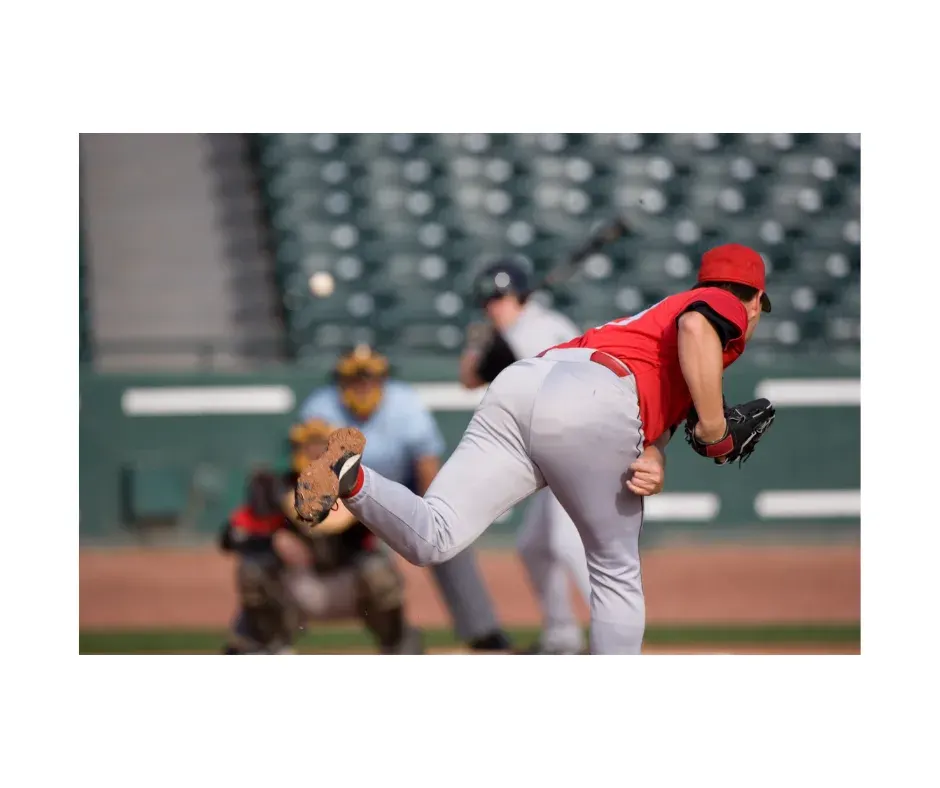
Stride length is exactly what it sounds like: how far you travel toward home plate during your delivery. But it's not just about covering ground. It's about how efficiently you use your lower half to generate power while maintaining balance and control.
Research has found that stride length, trunk flexion at ball release, and maximal shoulder external rotation are among the predictors of pitch velocity shared across playing levels (Manzi et al., 2024).
Why It Matters for You
Here's the deal: if you're trying to throw harder by just muscling up with your arm, you're leaving velocity on the table AND putting unnecessary stress on your shoulder and elbow. Your legs and core should be doing the heavy lifting.
A longer, more efficient stride means:
- More energy transfer from your lower half
- Less stress on your arm
- Better deception (your release point gets closer to the hitter)
What to Track
Pay attention to your stride length as a percentage of your height. Some research suggests an ideal stride length of around 80-85% of height for professional pitchers (SABR). If you're way under that, there's room to improve: and it's a safer path to velocity than just "throwing harder."
Key Takeaway: Efficient mechanics aren't just about performance: they're the foundation of baseball injury prevention. You can't throw hard if you're hurt.
Metric #2: Strength Metrics That Actually Transfer
What It Is
Here's something most high school pitchers overlook: strength training is a game-changer for velocity development, especially once your mechanics are solid.
In young athletes, strength-related measures like grip strength, vertical jump, and upper body power are associated with pitch velocity (Tremblay et al., 2022).
Why It Matters for You
If you've been working on your mechanics and you've hit a plateau, strength might be your missing link. Your body needs to be strong enough to handle the forces you're asking it to produce.
This doesn't mean you need to become a bodybuilder. It means developing functional strength that transfers to the mound:
- Lower body power (think box jumps, squats, lunges)
- Rotational core strength (medicine ball work, anti-rotation exercises)
- Grip and forearm strength (often neglected but crucial)
- Shoulder stability (keeping everything working together)

What to Track
Keep a simple log of your key lifts and explosive movements. Track your vertical jump, broad jump, and major compound lifts over time. If those numbers are going up while your mechanics stay clean, velocity gains often follow.
In my view, the best approach to sports performance training combines mechanical work with progressive strength development. One without the other leaves potential on the table.
Metric #3: Pitchability and Command
What It Is
Pitchability is the ability to effectively mix pitches, change speeds, attack different parts of the zone, and get hitters out: even when you don't have your best stuff. It's become increasingly measurable through advanced tracking, but you don't need expensive tech to start paying attention.
Why It Matters for You
Here's something scouts know that most high school players don't: a lower-velocity pitch with superior movement and deception can be more effective than an overpowering fastball.
Think about it. The guy throwing 85 with pinpoint command, a nasty changeup, and the ability to work both sides of the plate? He's going to have a longer, more successful career than the guy throwing 92 down the middle who walks four batters an inning.
What to Track
Start simple:
- First-pitch strike percentage (aim for 60%+)
- Ahead vs. behind counts (how often are you working from advantage?)
- Off-speed strike percentage (can you land your secondary stuff?)
- Walks per inning (command shows up here)
These numbers tell the real story of whether you can pitch: not just throw.
Why Tracking These Metrics Changes Everything
Here's where it all comes together. You can't improve what you don't measure.
Most high school pitchers (and their parents) track innings and pitch counts: which is great for workload management. But they stop there. They're missing the data that actually drives improvement and keeps arms healthy.
When you start tracking stride length trends, strength progressions, and pitchability metrics alongside your workload, you get a complete picture. You can see:
- When mechanical breakdowns happen (usually when fatigued)
- How strength gains correlate with velocity jumps
- Whether your command suffers in certain situations
This is why digital tracking tools are becoming essential. Notebooks and memory aren't reliable enough. You need a system that helps you connect the dots over weeks, months, and seasons.
The Bottom Line: The pitchers who track smarter, not just harder, tend to be the ones who develop faster AND stay healthier. That's the whole point of modern athletic recovery methods: using data to make better decisions.
Putting It All Together
If you're a high school pitcher serious about your development, here's your action plan:
- Get a baseline on your mechanics. Video yourself. Measure your stride length. Identify inefficiencies.
- Build a strength foundation. Find a qualified trainer who understands baseball-specific demands.
- Track your pitchability numbers. Every bullpen, every game. Be honest with yourself.
- Use a system to connect it all. Whether it's an app or a detailed spreadsheet, consistency is key.
And if you're dealing with tightness, compensation patterns, or nagging issues that won't go away? That's where Muscle Activation Technique can help. MAT assesses and addresses muscle imbalances at the source: aiming to improve your range of motion by enhancing how your muscles actually function. It's used by pro and collegiate athletes who want to move better and stay on the mound.
Call or text (360) 836-0107 to set up a time.
Frequently Asked Questions
What's more important for a high school pitcher: velocity or command?
Both matter, but command has more long-term value. A pitcher who can locate and sequence pitches effectively will outperform a hard thrower with no control almost every time. Focus on developing both.
How often should high school pitchers strength train?
Two to three times per week during the off-season, scaling back to maintenance during the competitive season. Always prioritize recovery and avoid heavy lifting the day before you pitch.
Can tracking metrics really help prevent injuries?
It can help. When you track workload alongside mechanical and strength data, you may be able to spot warning signs before they become injuries. Fatigue shows up in your numbers before it shows up as pain.
What's the best way to improve stride length?
Work on hip mobility, lower body strength, and timing in your delivery. It's not about forcing a longer stride: it's about building the strength and flexibility to achieve it naturally.
How do I know if my mechanics are efficient?
Video analysis is the best starting point. Compare your delivery to efficient models, paying attention to stride length, trunk rotation, and arm path. Working with a qualified instructor or sports performance specialist can accelerate this process.
Serving athletes in Seattle / Bellevue / Eastside
Individual results vary. This article is for educational purposes and is not medical advice. Talk with a qualified medical professional about your specific situation.