
Combatting Shoulder Tightness in Baseball Pitchers: The MAT and Neubie Advantage
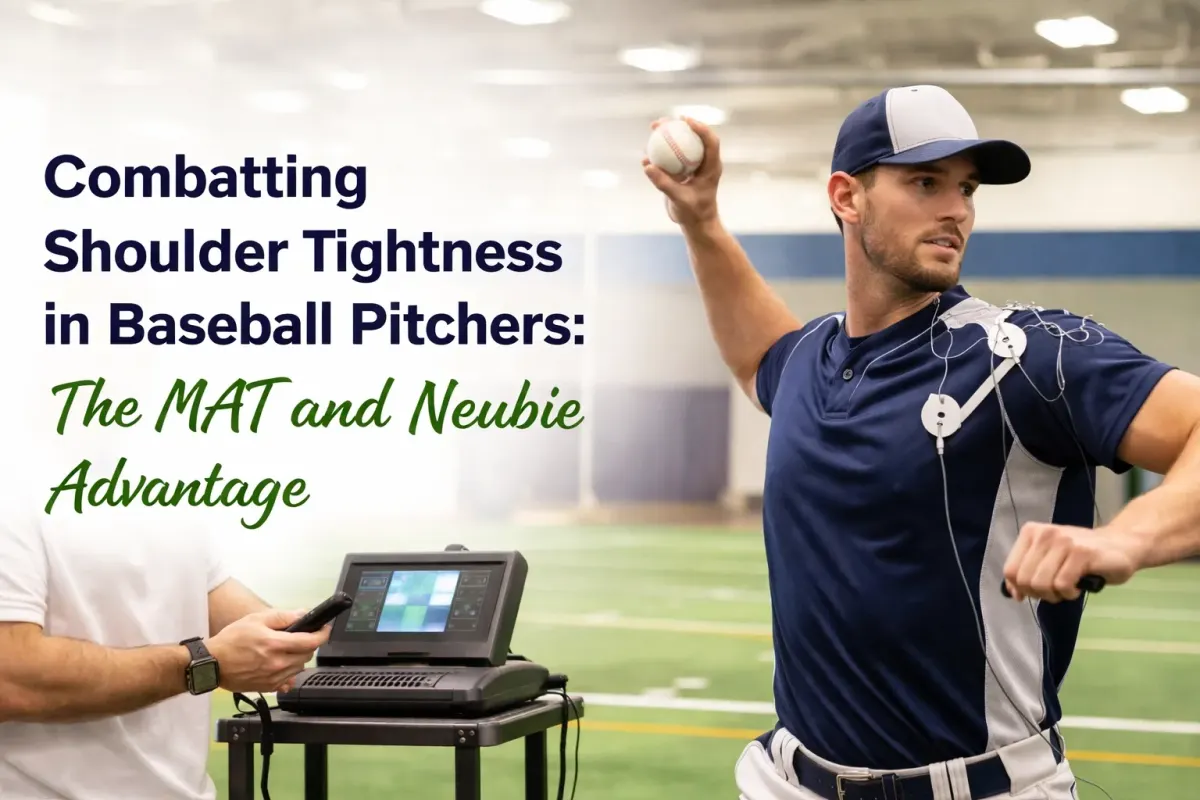
If you're a baseball pitcher dealing with chronic shoulder tightness, you've probably tried everything. Foam rolling. Stretching. Ice. Heat. Maybe even those massage guns everyone seems to have these days.
And yet here you are, still dealing with that familiar tension that just won't quit.
Here's the thing most people miss: tightness isn't the problem. It's a symptom. Your body is trying to tell you something, and until you address the actual issue, you're just putting a band-aid on it.
Let me explain how we approach shoulder tightness differently at Major League Activation: and why we approach it this way.
Why Your Shoulder Gets Tight in the First Place
Think about what happens when you throw a baseball. Your shoulder goes through an insane range of motion at high speeds. We're talking about one of the most violent movements in all of sports.
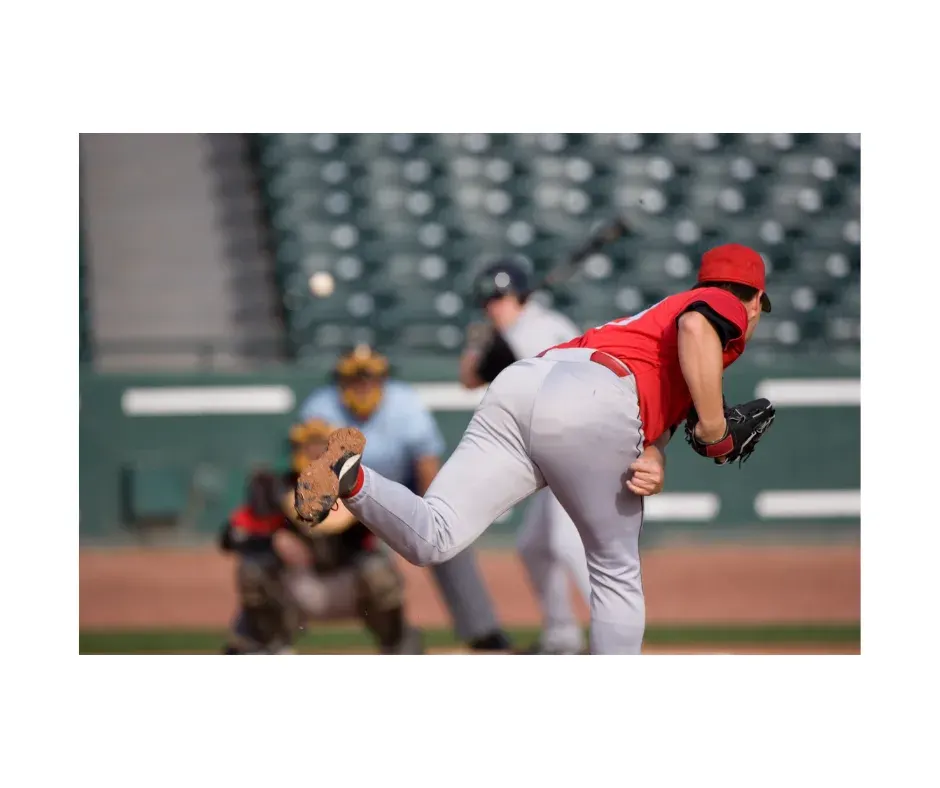
Your body is smart. When certain muscles aren't firing properly or can't handle the demands you're placing on them, your nervous system creates tightness as a protective mechanism. It's essentially putting the brakes on to prevent injury.
So when you stretch that tight muscle or beat it up with a foam roller, you might get temporary relief. But you haven't addressed why your body created that tightness in the first place.
The real question isn't "how do I loosen this up?" It's "what's making my body feel like it needs protection?"
This is where most traditional approaches to shoulder injury rehab fall short. They treat the symptom without addressing the cause.
The MAT Approach: Finding the Weak Link
Muscle Activation Techniques (MAT) takes a completely different approach. Instead of focusing on what's tight, we focus on what's weak or inhibited.
Here's how it works:
When a muscle isn't activating properly, other muscles have to pick up the slack. They compensate. And when muscles compensate for too long, they get overworked and tight.
MAT addresses this by:
- Assessing your range of motion to identify where limitations exist
- Testing specific muscles to find which ones aren't contracting efficiently
- Working to reactivate those inhibited muscles through precise techniques
- Aiming to restore balance so compensating muscles can relax
For pitchers, this is huge. Your shoulder relies on dozens of muscles working together in perfect coordination. If even one or two of those muscles aren't pulling their weight, everything else has to work overtime.

In my experience, the muscles people think are the problem almost never are. That posterior shoulder tightness you're feeling? Often it's because muscles in your rotator cuff or scapular stabilizers aren't doing their job. Once we get those firing again, the tightness often eases on its own.
No aggressive stretching required.
How the Neubie Fits Into Baseball Injury Prevention
While MAT is our primary tool for assessing and correcting muscle imbalances, we also use the Neubie as a supporting technology when appropriate.
The Neubie uses electrical stimulation therapy in a way that's different from traditional e-stim. Instead of just making muscles contract randomly, it helps identify areas where your nervous system might be holding back: and then works to re-educate those patterns.
Think of it this way: MAT finds where the communication breakdown is happening between your brain and muscles. The Neubie is designed to help reinforce that connection and support the process.
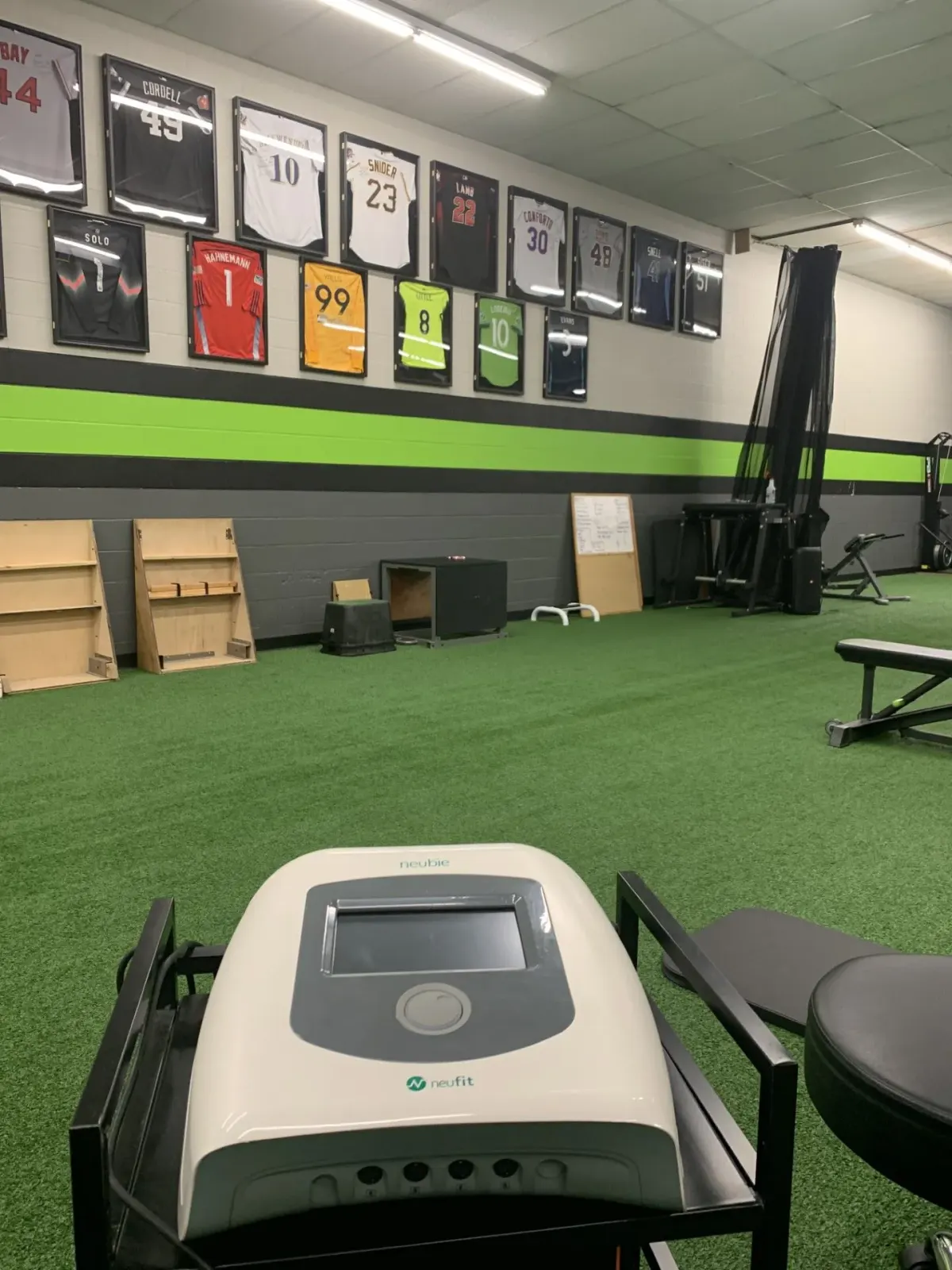
For pitchers dealing with stubborn shoulder issues, this combination is designed to support recovery. The MAT assessment helps show us what's going on. Then we can use tools like the Neubie to support the activation work and aim to help your body hold onto any improvements.
It's not magic. It's just working with your nervous system instead of against it.
What a Typical Session Looks Like
If you come in for shoulder injury rehab, here's what you can expect:
1. Range of Motion Assessment
We start by looking at how your shoulder moves. Where are the limitations? Where does it feel restricted? This gives us a roadmap of what's going on.
2. Muscle Testing
Next, we test individual muscles to see which ones are contracting efficiently and which ones aren't. This is the detective work: finding the weak links in the chain.
3. Activation Work
Once we identify inhibited muscles, we use specific techniques to get them firing again. Many athletes notice a change in range of motion after this.
4. Re-Assessment
We check your range of motion again to see what changed. This helps us know we're on the right track and shows you exactly what's possible when your muscles are working properly.

Many pitchers notice changes in that first session. The shoulder moves easier. The tightness feels different: less like something's stuck and more like normal muscle fatigue.
That said, lasting results take time. Your body developed these compensation patterns over months or years of throwing. Unwinding them doesn't happen overnight.
The Proactive Approach: Preventing Problems Before They Start
Here's something I wish more pitchers understood: you don't have to wait until something hurts to address it.
Baseball injury prevention should start before you're dealing with chronic tightness or pain. The same assessment process we use for rehab works just as well for identifying potential problems before they become actual problems.
Signs you might benefit from a proactive approach:
- Your arm feels "dead" after pitching
- You've noticed gradual loss of velocity
- One shoulder sits differently than the other
- You've had minor aches that come and go
- Your mechanics have changed without you meaning to
Your body adapts to dysfunction slowly. By the time you're dealing with real shoulder tightness, the compensation patterns are usually well-established. Catching these imbalances early makes everything easier to address.
If you're serious about your Shoulder Care, getting assessed during the off-season or early in your training cycle can save you a lot of headaches down the road.
Why This Matters for Your Pitching Career
Let me be real with you. Shoulder problems end careers.
Every year, talented pitchers get shut down because of injuries that could have been prevented or addressed earlier. The traditional approach of "stretch it, ice it, and hope for the best" just doesn't cut it for athletes putting their bodies through the demands of pitching.
When your muscles are activating properly, the goal is that:
- Your shoulder moves through its full range of motion without restriction
- Compensating muscles can finally rest instead of constantly working overtime
- Your mechanics improve because you're not working around limitations
- You can actually feel what your body is doing instead of just fighting tightness
This isn't about becoming invincible. It's about giving your body the best possible chance to perform and recover.
Ready to Address the Real Issue?
If you're tired of dealing with shoulder tightness that just won't go away, it might be time to try a different approach.
At Major League Activation, we specialize in working with athletes who need more than the standard "stretch and strengthen" advice. Using MAT assessment and targeted activation techniques, we work with pitchers to look for the root of what's actually causing their shoulder issues.
Whether you're in the middle of dealing with chronic tightness or you want to take a proactive approach to baseball injury prevention, we can help you understand what's really going on with your body.
Call or text (360) 836-0107 to set up a time.
Your shoulder is trying to tell you something. Let's figure out what it is.
Individual results vary. This article is for educational purposes and is not medical advice. Talk with a qualified medical professional about your specific situation.