
Compensation Patterns: The Silent Performance Killer You Can’t Feel
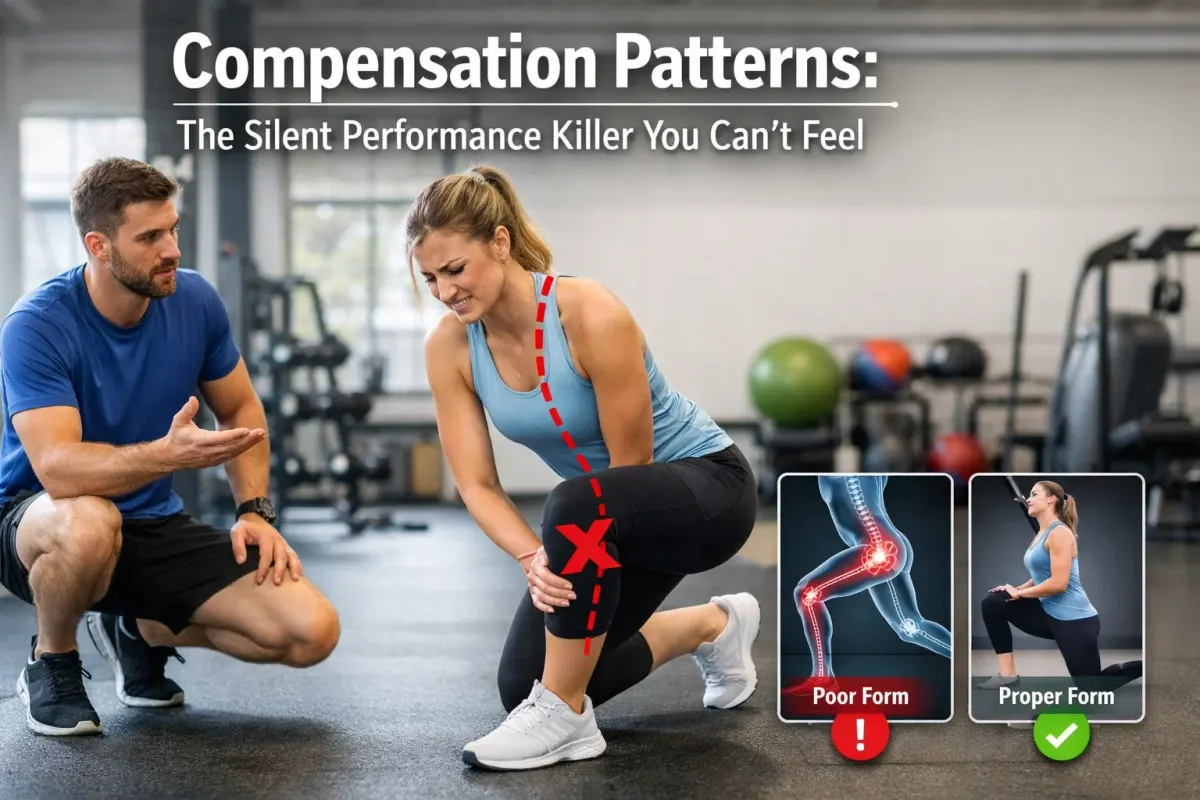
Have you ever finished a workout or a game feeling like your body is just "off"? Maybe it’s a nagging ache in your lower back that won’t go away, or a shoulder that feels "crunchy" every time you reach for something on a high shelf. You go to the doctor, get an MRI, and they tell you everything looks "normal."
So, why does it still hurt?
In my view, the answer usually lies in something most traditional healthcare misses: compensation patterns. These are the silent performance killers. They don’t show up on a scan, and they don’t always cause pain right away. But they are the reason you aren’t hitting your peak speed, why your recovery is slowing down, and why that "minor" tweak keeps coming back.
At Major League Activation LLC, we work with everyone: from pro ballplayers to weekend warriors: with the same elite level of care. And the first step toward moving better is understanding how your body is "cheating" to keep you moving.
The Body’s Secret "Workaround" Strategy
Think of your body like a high-performance sports car. When every part is aligned and every cylinder is firing, the car is fast, efficient, and smooth. But what happens if one spark plug fails? The car doesn’t just stop in the middle of the highway. Instead, the other cylinders work harder to make up for the loss.
Your body is the exact same way. It is a master of survival. If a specific muscle: let’s say your glute: isn't "firing" correctly because of a neurological disconnect, your brain doesn't just give up on walking. It recruits your lower back and your hamstrings to do the job the glute was supposed to do.
This is compensation.
Your body is "cheating" to get the movement done. In the short term, this is a miracle of human biology. It allows you to finish the game or get through your workday. But in the long term? It’s a disaster. Those "helper" muscles weren't designed to carry that extra load. Eventually, they get overworked, they tighten up, and then: snap: you’re dealing with an injury that seemingly came out of nowhere.

Why You Can’t "Feel" the Killer
The reason we call these patterns "silent" is that your nervous system is incredibly good at hiding them from you. Your brain’s primary goal is to move you from Point A to Point B. It doesn't care if the movement is "correct" or "efficient"; it only cares that it happens.
Because your brain has mapped out these workarounds, the compensation starts to feel like your "normal" way of moving. You might notice:
- You feel "tight" even after 20 minutes of stretching.
- One side of your body feels significantly weaker than the other.
- You have a "hit list" of recurring minor injuries.
- Your performance has plateaued despite training harder.
If you’re experiencing any of these, your body is likely screaming for help through the only language it knows: discomfort and decreased performance.
Key Takeaway: Pain is usually the last symptom of a problem, not the first. By the time you feel the ache, the compensation pattern has likely been there for weeks, months, or even years.
The Myth of the "Tight" Muscle
One of the most common compensation patterns I see involves the hamstrings. People come into the clinic all the time saying, "Matt, my hamstrings are so tight, I stretch them every day but nothing changes."
Here’s the truth: Your hamstrings probably aren't actually tight.
What’s usually happening is that your hip stabilizers or your core muscles aren't doing their job. Your brain senses this instability and tells your hamstrings to "lock down" to protect your spine. The tightness you feel is actually tension: a protective brake being pulled by your nervous system.
When you stretch that "tight" muscle, you’re trying to force a "safety" switch to open. Your brain hates that. It will just pull the brake harder the next time you move. This is why you can stretch for 30 seconds, feel a temporary release, and be right back to square one ten minutes later.
At Major League Activation, we don’t just stretch the symptom. We use Muscle Activation Technique (MAT) to find the muscle that isn't working, which can help the "tight" muscle let go.

How We Find the Hidden Patterns
Traditional physical therapy often focuses on where the pain is. If your shoulder hurts, they look at the shoulder. But if your shoulder is hurting because your opposite hip isn't stabilizing your torso during a throw, rubbing the shoulder isn't going to fix a thing.
This is where our approach changes the game. We look at the body as an integrated system.
1. Muscle Activation Technique (MAT)
MAT is our primary tool for "interrogating" the nervous system. We use specific range-of-motion tests to see where your body is limited. If you can’t move your joint into a certain position, it’s usually because the brain doesn't trust the muscles in that range to protect you. We identify those weak links and work to "re-activate" the connection between the brain and the muscle.
2. The Neubie Advantage
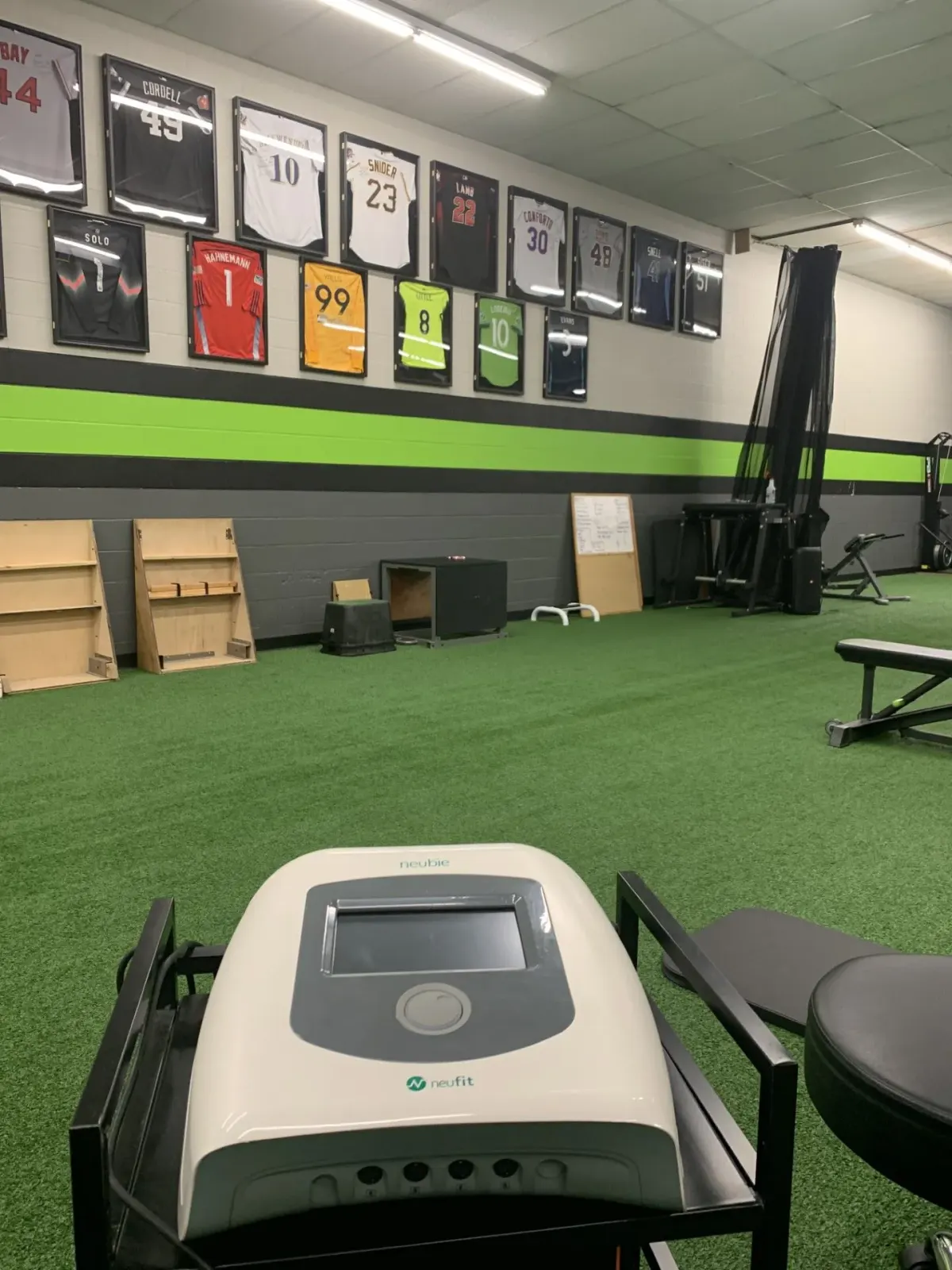
While MAT is the foundation, we sometimes use the Neubie (Neuro-Bio-Electric) device, which is designed to support recovery. Most electrical stimulation devices just hit the muscle to make it jump. The Neubie is different; it talks to the nervous system.
It helps us find exactly where the "neurological shadow" is: the places where your brain has lost contact with the muscle. By sending a specific signal to that area while you perform functional movements, we aim to "reset" the pattern.
Pro-Level Shoulder Care for Everyone
Whether you’re pitching in a local league or just trying to play catch with your kids without wanting to cry the next day, Shoulder Care is non-negotiable. The shoulder is the most mobile joint in the body, which also makes it the most prone to compensation.
If your rotator cuff isn't firing perfectly, your upper traps and neck will try to take over. This leads to that constant "knotted" feeling in your neck and eventually leads to impingement or tears.
We don’t just give you a list of "monster walks" and band exercises. We look at your specific biomechanics. We check the "brakes" (the muscles that slow the arm down) and the "gas" (the muscles that accelerate it). If they aren't synced up, you're driving with one foot on each pedal.
To help our clients maintain these gains between sessions, we utilize The Diamond Arm Lab app. It’s a tool that allows you to track your progress and follow customized activation protocols between sessions.
The Consequences of Doing Nothing
I’m not a fan of being an alarmist, but we have to be realistic. A compensation pattern is like a small crack in a foundation. If you keep piling more weight on it (heavier lifting, more innings, faster sprints), that crack will spread.
Ignoring these patterns leads to:
- Chronic Pain: What was once a "tweak" becomes a constant companion.
- Degeneration: Joints wear out faster when they aren't moving the way they were designed to.
- Reduced Career Longevity: Whether you’re an athlete or just someone who wants to stay active into their 70s, compensation is the fastest way to the sidelines.
The good news? These patterns can be worked on. Your nervous system is incredibly plastic: it can learn new, better ways to move if you give it the right input.

Your 30-Second "System Check"
Want to see if you might be compensating right now? Try this quick test:
- Stand on one leg with your eyes closed.
- Notice what happens. Does your foot cramp up? Does your opposite hip hike way up into the air? Do you feel your lower back tensing?
- If you can't stay stable without "gripping" with unrelated muscles, your body is using a compensation pattern to find balance.
If that test was a struggle, don't panic. It just means there's room for improvement in your movement quality.
Ready to Stop Cheating and Start Performing?
You don't have to live with mystery aches, and you don't have to accept a "plateau" as your final destination. At Major League Activation LLC, we’re here to help you find the "why" behind your limitations.
We’ll use MAT to work on the neurological static, integrate the Neubie where it makes sense, and get you set up with The Diamond Arm Lab app so you have tools to support your arm care long-term.
It’s time to stop treating the symptoms and start addressing the system.
Call or text (360) 836-0107 to set up a time.
Let's go after those "silent killers" so you can work toward moving the way you were meant to.
Individual results vary. This article is for educational purposes and is not medical advice. Talk with a qualified medical professional about your specific situation.