
Shoulder Care Secrets: How to Boost Your Arm Speed Without Increasing Injury Risk

Do you ever feel like you’re hitting a wall with your throwing velocity? You’re putting in the hours, you’re hitting the weight room, and you’re long-tossing until the sun goes down, but the radar gun isn’t budging. Worse yet, maybe you’re starting to feel that nagging "twinge" in the front of your shoulder or a dull ache after a heavy outing.
It’s the classic athlete’s dilemma: you want more power, but your body is sending you warning signals. In my view, most players approach arm speed entirely backward. They focus on the acceleration phase: trying to whip the arm faster: without realizing that the body will only let you go as fast as your "brakes" can handle. If your shoulder doesn't feel stable, your brain will literally throttle your speed to protect you from an injury.
At Major League Activation LLC, we focus on a smarter approach to Shoulder Care. By identifying muscle imbalances and ensuring your nervous system is actually talking to your muscles, we aim to unlock speed you didn't know you had: while keeping arm health the priority.
The "Brakes" Theory: Why Stability Equals Speed
Think of your shoulder like a high-end sports car. If you put a Ferrari engine into a car with bicycle brakes, would you ever feel comfortable hitting 100 mph? Probably not. Your nervous system works the same way. If your decelerators (the muscles on the back of your shoulder) are weak or "offline," your brain won't let your accelerators (the big muscles on the front) fire at 100%.
This is where many athletes run into trouble. They spend all their time on "beach muscles": the chest and front delts: and ignore the rotator cuff and scapular stabilizers. When these muscles aren't firing correctly, your humerus (the upper arm bone) can shift slightly in the socket, leading to impingement, labrum tears, or rotator cuff strains.
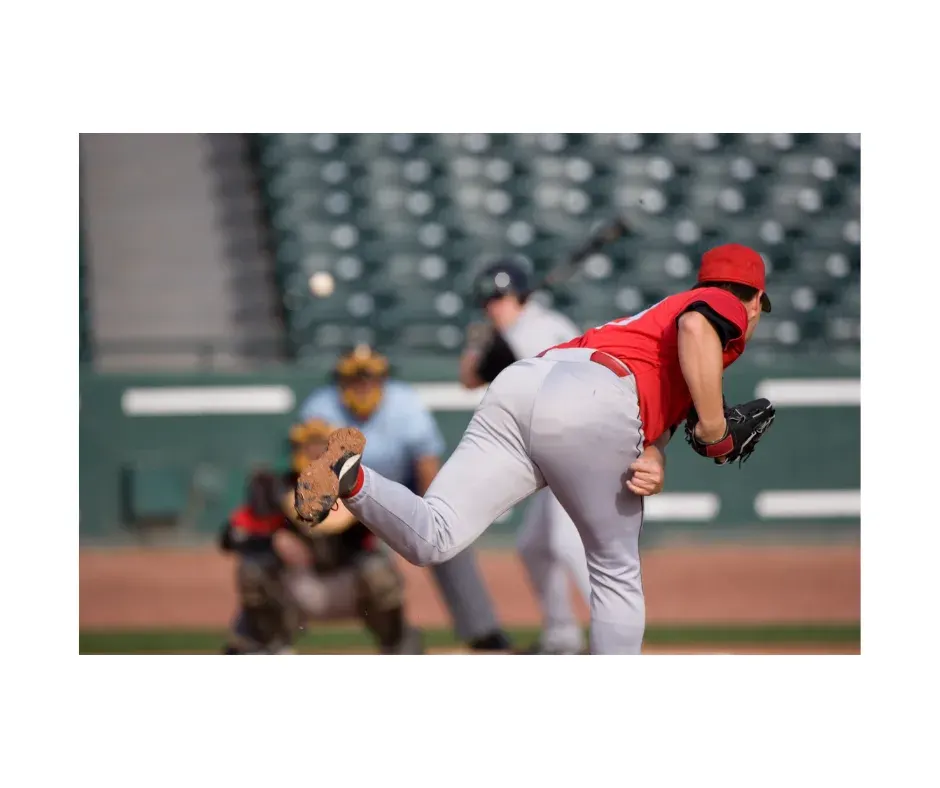
Identifying the Weak Links with MAT
At Major League Activation LLC, we don’t just give you a list of generic exercises. We use Muscle Activation Techniques (MAT) to find exactly where the communication breakdown is happening.
Unlike traditional methods that focus on stretching tight muscles, MAT focuses on activating weak ones. In my experience, most "tightness" in the shoulder isn't a flexibility issue; it's a protective tension. Your brain makes a muscle feel tight because it's trying to stabilize a joint where another muscle isn't doing its job.
When we use MAT, we assess your range of motion to see where your body is compensating. By addressing these imbalances and improving muscle function, we aim to increase your range of motion without ever having to "stretch" a single fiber. The goal is a shoulder that is both mobile and stable.
The Secrets to Building a Bulletproof Rotator Cuff
If you want to boost your arm speed, your rotator cuff conditioning needs to be top-tier. These four small muscles are responsible for keeping that arm bone centered in the socket while you're generating massive amounts of force.
1. Side-Lying External Rotations
This is a staple for a reason. In an EMG study of common external rotation exercises, side-lying external rotation produced the most activity in the infraspinatus and teres minor: the muscles on the back of your shoulder (Reinold et al., 2004).
- How to do it: Lie on your side with a 2-5lb weight. Keep your elbow tucked into your side (you can place a rolled-up towel there for better form). Rotate the weight toward the ceiling, ensuring your shoulders stay stacked.
- The Goal: Perform 2-3 sets of 10-15 reps. Focus on the quality of the movement rather than the weight.
2. Resistance Band External Rotations
Anchor a resistance band at elbow height. Stand sideways to the anchor point, keep your elbow close to your ribs, and rotate your hand outward away from your body. This provides constant tension throughout the movement, which is great for building endurance in those stabilizing muscles.
"The rotator cuff doesn't just need to be strong; it needs to be reactive. It has to fire in milliseconds to protect the joint during a throw."
Improving Overhead Mobility and Stability
Generating speed requires you to get into deep overhead positions. If your shoulder mobility is restricted, you’ll find yourself "pushing" the ball instead of whipping it, which puts massive stress on the elbow and shoulder.
The Landmine Shoulder Press
This is one of my favorite exercises for overhead athletes. Unlike a traditional overhead press, the landmine press allows the shoulder to move in a more natural, "scapular plane" path. This improves overhead mobility while putting significantly less strain on the joint.
- The Action: Use a staggered stance (opposite foot forward) and press the barbell up and slightly forward. This builds stability and coordination through the entire kinetic chain.
Single-Arm Dumbbell Snatches
These are fantastic for developing "dynamic stability." As the weight goes overhead, your shoulder has to stabilize instantly in a flexed position. This mirrors the demands of the "follow-through" in a throw, teaching your body how to handle high-velocity deceleration.

The Hidden Velocity Killer: Shoulder Extension
While everyone talks about "external rotation" (how far back your arm goes), very few talk about shoulder extension. This is the ability of your arm to move behind your body. Limited shoulder extension is a massive bottleneck for velocity. If you can’t get your arm back far enough during the wind-up, you’re shortening the distance over which you can accelerate the ball.
By improving your muscle function through MAT, we aim to open up this range of motion. When the muscles that pull the arm back are actually "switched on," you can gain a longer "runway" to generate speed.
Tracking Your Progress with Technology
You can't manage what you don't measure. This is why we are big proponents of using technology to track your arm workload daily. One of the best tools available today is The Diamond Arm Lab.
This app allows you to monitor your arm's readiness, track your workloads, and keep an eye on overtraining. By using The Diamond Arm Lab, you can see how your throwing program is trending over time. If the data shows your strength is dipping, that’s a signal to consider dialing back and focusing on recovery.
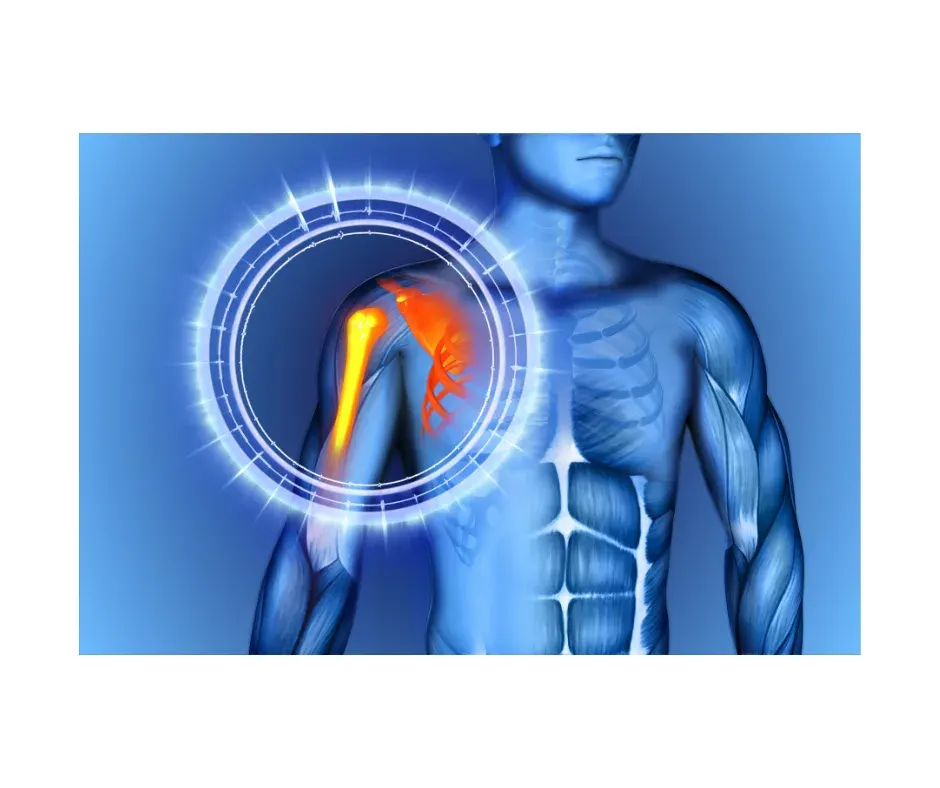
Red Flags: When to Stop and Reassess
Confidence is key in sports, but pride can be a career-killer. You need to know when "working through it" is actually doing permanent damage. If you experience any of the following, it’s time to stop throwing and get an assessment:
- Point tenderness: Pain that you can point to with one finger on the "bony" parts of the shoulder.
- Night pain: If your shoulder aches while you’re trying to sleep, that’s a sign of significant inflammation.
- Loss of velocity: A sudden, unexplained drop in speed is often the body’s way of protecting an underlying weakness.
- Tingling or numbness: This could indicate nerve involvement or heavy compensation patterns.
Ignoring these signs won't make you tougher; it will just make your rehab longer.
Action Steps for a Faster, Healthier Arm
If you’re serious about your Shoulder Care, here is your blueprint for the next 30 days:
- Assess, Don't Guess: Schedule a session at Major League Activation LLC to check your muscle function. Let’s find the "weak links" before they cause problems.
- Download The Diamond Arm Lab: Start tracking your daily readiness. Consistency is the secret to longevity.
- Prioritize the Backside: For every "pushing" exercise you do in the gym, do two "pulling" or stabilizing exercises.
- Incorporate Landmine Presses: Swap out your heavy overhead presses for landmine variations to protect the joint while building power.
- Listen to the Data: If The Diamond Arm Lab shows your throwing workload spiking well above your normal range, take a recovery day.
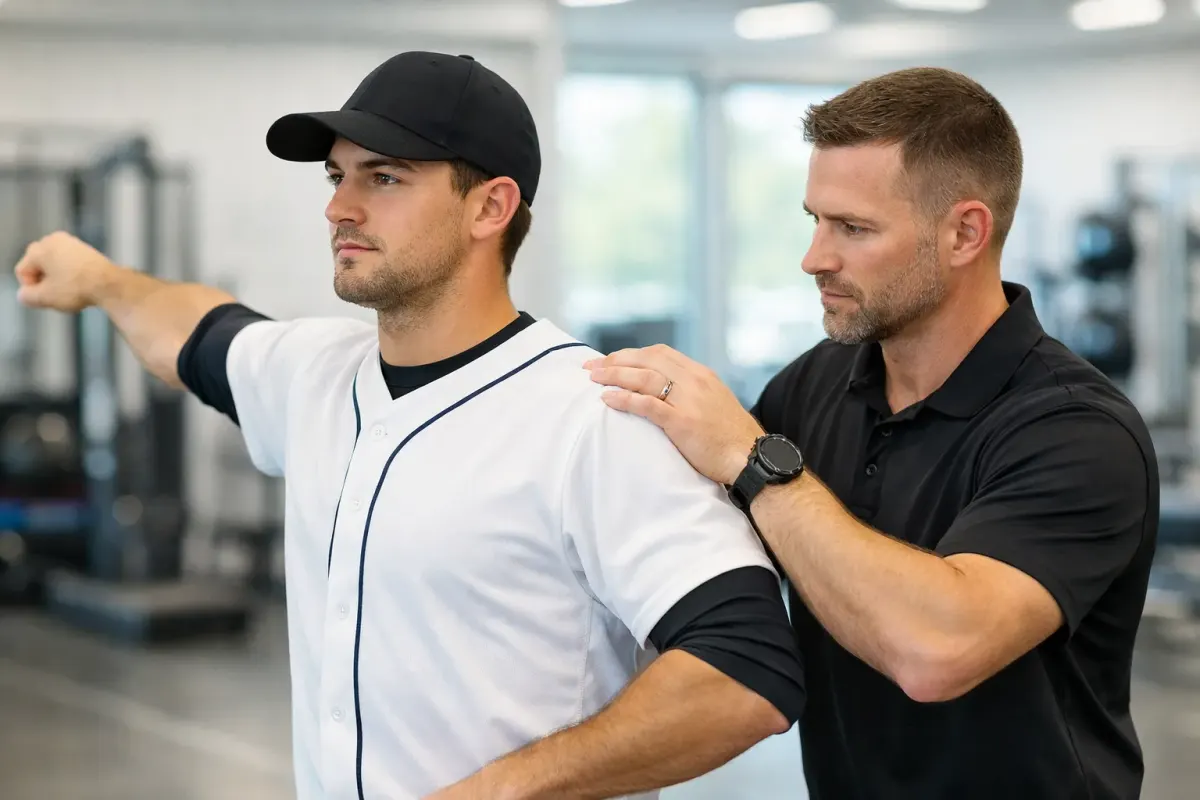
Boosting your arm speed isn't about throwing harder; it's about throwing smarter. By focusing on the health and activation of your shoulder muscles, you work toward a foundation that can handle the high-octane forces of elite performance.
Don't wait until you're sitting in a doctor's office looking at an MRI. Let’s get your body firing on all cylinders now.
Ready to unlock your full potential?
Call or text (360) 836-0107 to set up a time for a full assessment and start working toward a healthier, more durable arm today.
Individual results vary. This article is for educational purposes and is not medical advice. Talk with a qualified medical professional about your specific situation.