
Stop Wasting Time on Generic Rehab: The Pro Baseball Approach to Fixing Compensation Patterns
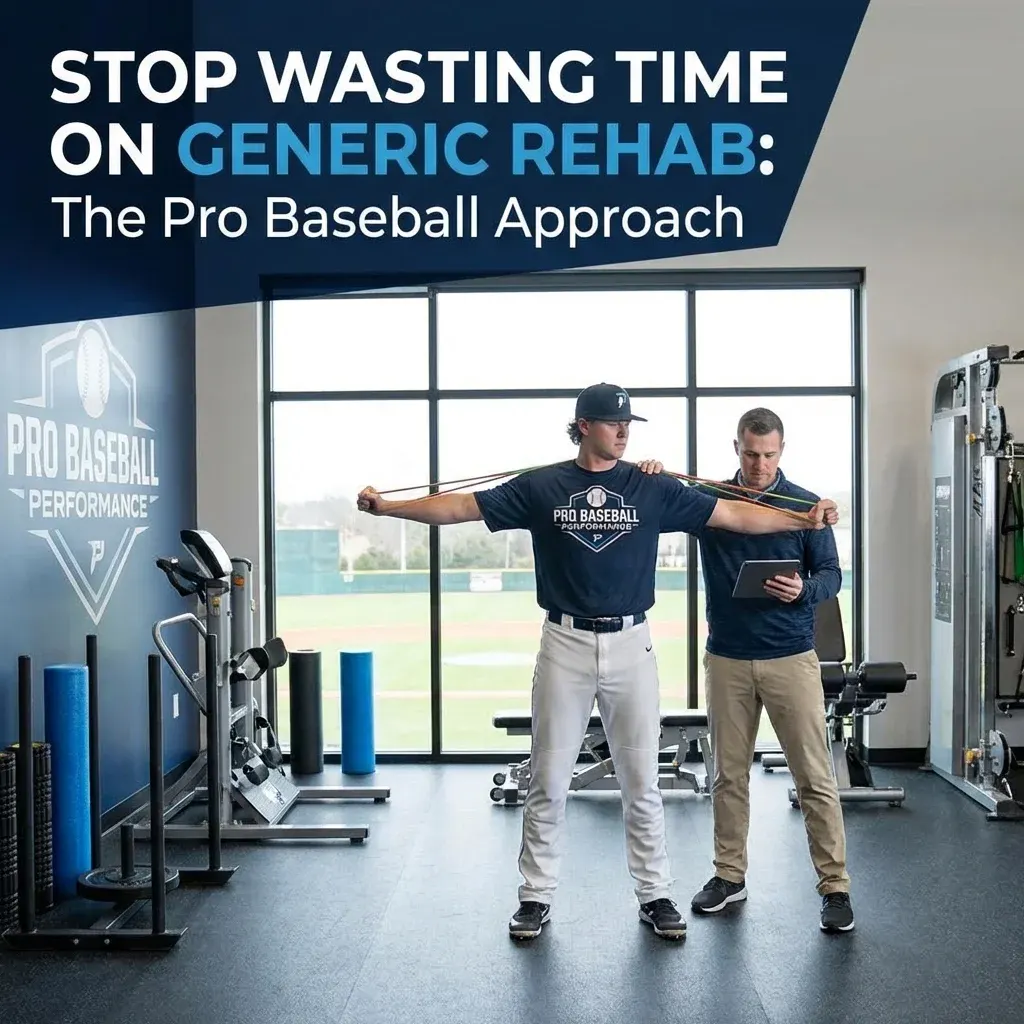
You've been there. Six weeks of generic physical therapy exercises that felt more like busy work than actual healing. The same three stretches everyone gets, regardless of whether you're a weekend warrior with shoulder impingement or a high school pitcher dealing with elbow pain.
Here's the frustrating part: you probably got "better" enough to be discharged, but you still don't feel right. Your shoulder still tightens up after throwing. Your back still aches during your swing. You're moving, but you're not moving well.
After 19+ years working with professional baseball players, I can tell you exactly why this happens: and more importantly, what we do instead.
The Problem with One-Size-Fits-All Rehab
Generic rehabilitation treats symptoms, not systems. It's like trying to fix a car's alignment by only focusing on the tire that's wearing out. You might replace that tire, but if the underlying alignment issue isn't addressed, you'll be back with the same problem in a few months.
Traditional PT often follows a predictable pattern: reduce pain, restore some range of motion, strengthen with basic exercises, and call it good. But here's what gets missed: your body has spent weeks or months developing compensation patterns to work around your injury.
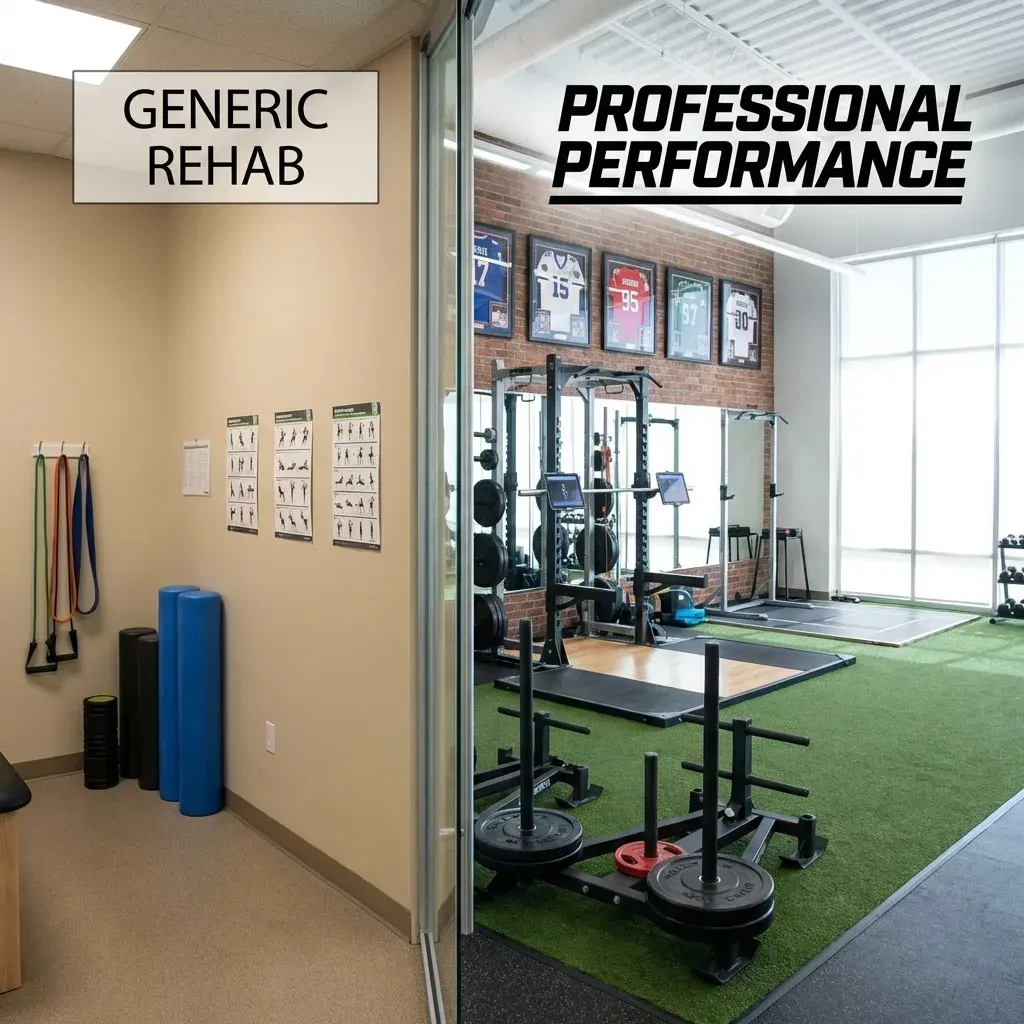
Those compensations don't just disappear because your pain is gone. Your nervous system has literally rewired itself to move differently, and unless that's specifically addressed, you're building strength and mobility on top of faulty movement patterns.
How Professional Baseball Approaches Recovery Differently
When a major league pitcher comes to me with shoulder issues, we don't start with generic shoulder exercises. We start by understanding exactly how their entire kinetic chain is functioning: or more accurately, how it's not functioning.
Professional baseball rehabilitation uses progressive, sport-specific protocols that address individual biomechanical deficits rather than applying the same program to everyone. This isn't just about doing "baseball exercises": it's about understanding that every position has different demands, every injury creates unique compensations, and every person's nervous system responds differently.
Understanding Compensation Patterns
Here's something most people don't realize: your body is incredibly good at finding ways to move around problems. Got a tight hip? Your back will rotate more. Shoulder not moving well? Your elbow and wrist will pick up the slack.
These compensation patterns are your body's short-term solution to keep you functional. But over time, they become the problem themselves.
In baseball players, we commonly see compensation patterns that result in extended spinal positions, especially at the lumbar spine, when proper core control is lacking. A pitcher might start compensating for reduced shoulder mobility by over-rotating through their trunk, which eventually leads to back pain that seems completely unrelated to the original shoulder issue.

This is why that middle-aged adult who "just wants to play recreational softball without pain" often gets stuck in cycles of treating one area after another, never quite getting back to feeling normal.
The Muscle Activation Technique (MAT) Difference
Muscle Activation Technique takes a completely different approach. Instead of assuming we know what's weak or tight, MAT tests your body's actual ability to contract muscles efficiently and in the right sequence.
Think of it like this: if your shoulder blade isn't stabilizing properly, no amount of shoulder strengthening will create lasting change. Your nervous system will keep compensating around that unstable foundation. MAT identifies which muscles aren't firing correctly and aims to re-activate them before building strength on top.
This isn't about stretching tight muscles or randomly strengthening weak ones. It aims to restore the precise neurological control that allows your body to move efficiently without compensations.
When we identify that your rotator cuff isn't providing proper stability, we don't just give you resistance band exercises. We use specific positional testing to determine exactly which aspect of rotator cuff function is compromised, then use precise palpation and positioning to help reactivate that neurological connection.
Adding the Neubie Device for Accelerated Results
The Neubie electrical stimulation device takes this approach even further. Unlike traditional e-stim that just contracts muscles, the Neubie uses direct current designed to improve how your nervous system communicates with your muscles.
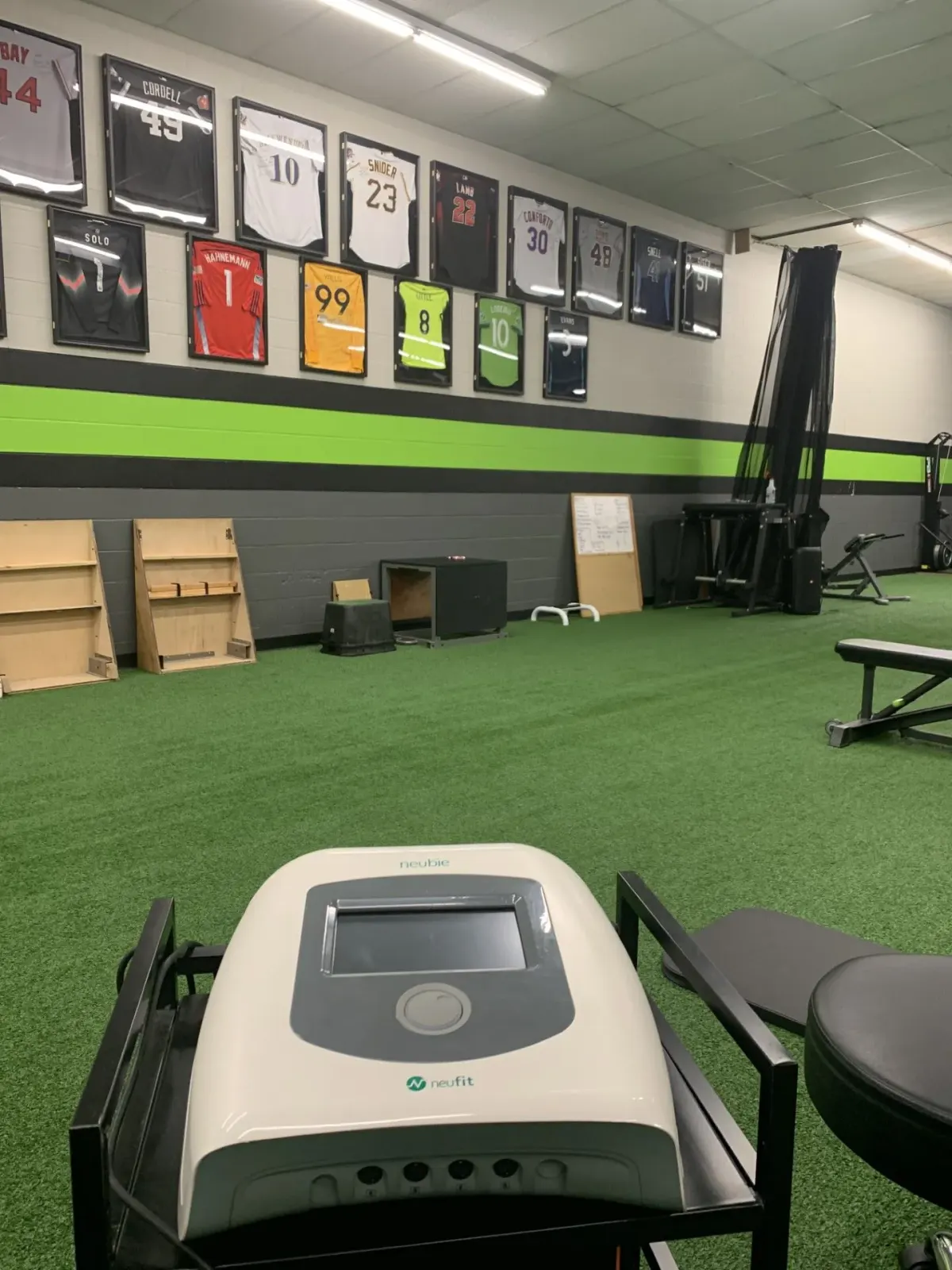
Here's what makes it different: while you're connected to the Neubie, you're actively moving and contracting muscles. This combination of electrical stimulation and voluntary movement is designed to support neurological changes that can help address compensation patterns.
The Neubie essentially helps "remind" your nervous system how to activate muscles correctly. When combined with MAT, it is designed to support restoring proper muscle function and reducing compensations.
The Four-Stage Progressive Approach
Professional baseball rehab follows a structured progression that ensures each stage builds properly on the last:
Stage 1: Muscle Activation – Using MAT to establish which muscles aren't firing correctly and working to reactivate them. This is like checking the foundation before building the house.
Stage 2: Stabilization – Teaching your body to maintain proper positions and muscle activation patterns during basic movements. We're not adding complexity yet: just making sure the basics are solid.
Stage 3: Strengthening with Neuromuscular Control – Building strength while maintaining proper activation patterns. This is where the Neubie becomes particularly valuable, allowing us to strengthen muscles while ensuring they're firing correctly.
Stage 4: Sport-Specific Integration – Gradually returning to throwing, swinging, or whatever activities you need to do, while monitoring that compensation patterns don't return.
Most generic rehab jumps straight to stage 3 without properly establishing stages 1 and 2. That's why people often feel "stronger" after PT but still don't move well.
Why We Treat Everyone Like a Pro Athlete
You might think, "I'm not trying to make the majors: I just want to throw batting practice to my kid without my shoulder hurting." But here's the thing: your nervous system doesn't know the difference between preparing for the World Series and preparing for weekend softball.

Bringing the same attention to detail, the same focus on movement quality, and the same progressive approach to every athlete is designed to support progress regardless of your goals. Whether you're a high school pitcher or a 45-year-old weekend warrior, your body tends to respond to precise, systematic approaches better than generic ones.
The Ongoing Monitoring Difference
Professional approaches don't end when pain goes away. There's ongoing monitoring of strength, flexibility, and movement mechanics to help reduce the risk of re-injury. This is huge: most people return to activities as soon as they feel better, without confirming that their movement patterns have actually been corrected.
We use periodic reassessments to ensure that compensation patterns aren't creeping back in and that progress is holding.
What This Means for Your Recovery
If you've been through generic rehab and still don't feel right, you're not broken. You just haven't addressed the underlying compensation patterns that developed during your injury.
The combination of MAT and Neubie, applied with the same progressive approach used in professional baseball, is designed to identify and address these patterns, with the goal of lasting change.
This isn't about doing more exercises or working harder: it's about working smarter, addressing root causes instead of symptoms, and approaching your nervous system with the specificity it requires.
Ready to stop wasting time on generic approaches and experience what professional-level care can do for your recovery? Call or text (360) 836-0107 to set up a time.
Individual results vary. This article is for educational purposes and is not medical advice. Talk with a qualified medical professional about your specific situation.