
The Parent's Checklist: 5 Early Warning Signs Your Young Pitcher is Overworked
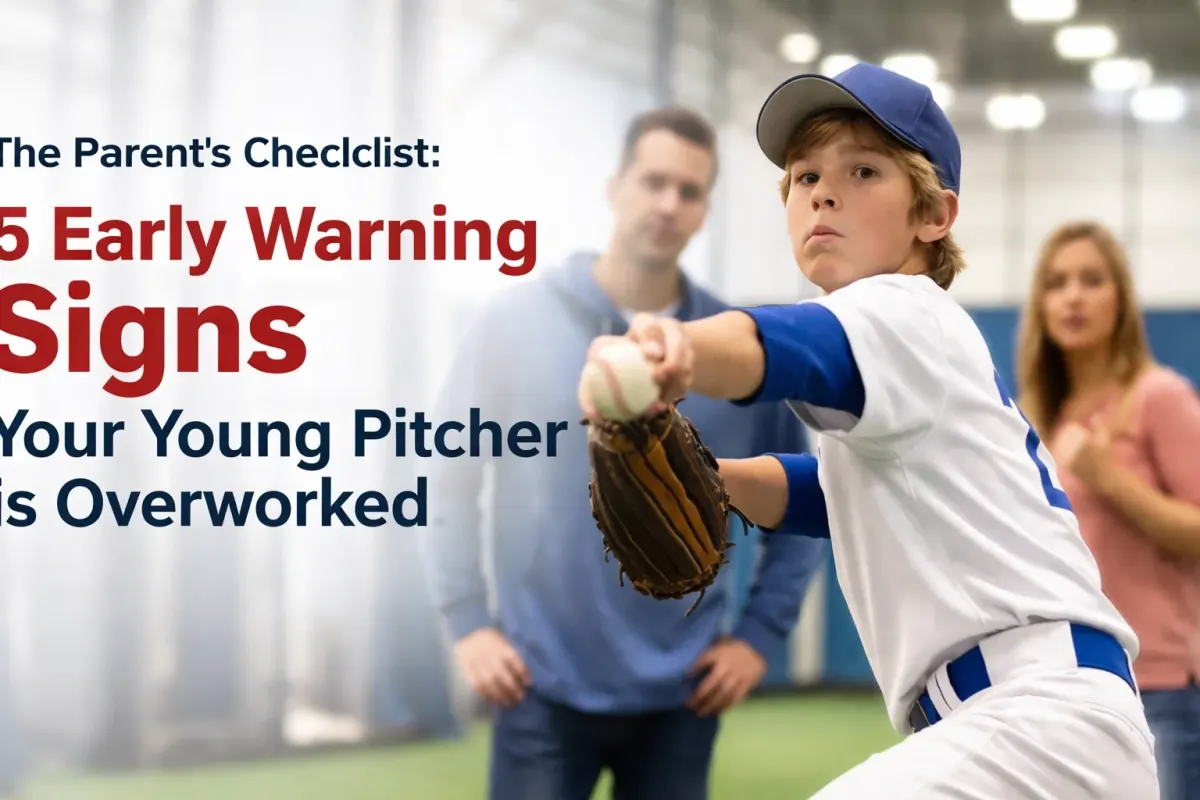
You're sitting in the bleachers watching your kid pitch, and something feels… off. Maybe their fastball isn't popping like it used to. Maybe they're rubbing their shoulder between innings. Or maybe they just don't seem as excited to be out there anymore.
As a parent, you know your athlete better than anyone. But how do you know when normal post-game soreness crosses the line into something more serious?
Here's the thing, youth pitching injuries are a growing concern: Tommy John surgery rates in 15- to 19-year-olds have been rising (Erickson et al., 2015), and overuse and pitching while fatigued are among the strongest risk factors (Olsen et al., 2006). The key is catching the warning signs early, before a minor issue becomes a season-ending (or career-ending) problem.
Let me walk you through the five early warning signs that your young pitcher might be overworked, and what you can do about it.
Why Overwork Happens (And Why It's So Common)
Before we dive into the checklist, let's talk about why this happens in the first place.
Youth baseball has changed dramatically over the past two decades. Between travel ball, showcases, tournaments, and school teams, many young pitchers are throwing year-round without adequate rest. Add in the pressure to impress scouts and earn roster spots, and you've got a recipe for overuse injuries.
The problem? Young arms aren't built to handle adult-level workloads. Their bones, ligaments, and muscles are still developing. When we push them too hard, too fast, the body starts to break down, often in ways that aren't immediately obvious.
That's where baseball injury prevention becomes critical. And it starts with you, the parent, knowing what to look for.

The 5 Early Warning Signs Every Parent Should Know
1. Persistent Arm, Shoulder, or Elbow Pain
Let's be real, some soreness after a game is normal. Pitching is hard work, and muscles get tired.
But there's a big difference between "my arm is a little tired" and pain that lingers for days or keeps coming back.
Red flags to watch for:
- Pain that doesn't go away after 2-3 days of rest
- Discomfort that intensifies during or after throwing
- Tenderness in the elbow, shoulder, or forearm that your pitcher tries to hide
- Any sharp or shooting pain (this is a big one)
If your pitcher is consistently complaining about their arm, or worse, trying to tough it out and not telling you, it's time to pay attention. Lingering pain is often the first sign of overuse, and catching it early can prevent more serious injuries down the road.
2. Decreased Velocity or Control
Has your pitcher's fastball lost some zip lately? Are they missing spots they used to hit consistently?
A sudden drop in velocity or control is one of the clearest signs of arm fatigue.
Here's why: when the muscles responsible for throwing get tired, they can't generate the same power or maintain the same precision. Your pitcher might be trying just as hard, maybe even harder, but the results aren't there.
This is the body's way of saying, "Hey, I need a break."
What to look for:
- Fastballs that seem slower than usual
- Pitches consistently missing high, low, or wide
- Difficulty locating off-speed pitches
- Your pitcher "overthrowing" to compensate for lost velocity
If you're noticing these patterns, it's worth having a conversation with your pitcher and their coach about workload.
3. Inconsistent Pitching Mechanics
This one can be tricky to spot if you're not trained to analyze pitching mechanics: but trust your instincts.
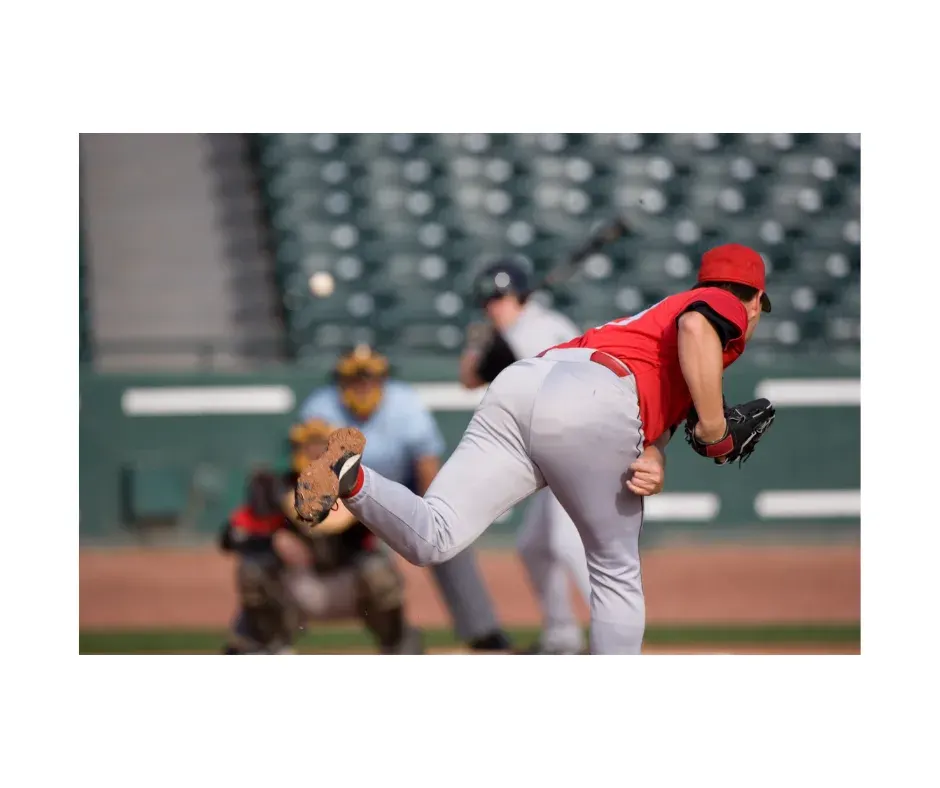
When pitchers are fatigued, they unconsciously change their delivery to compensate for discomfort or weakness.
Maybe their arm slot has dropped. Maybe their stride is shorter. Maybe they're rushing through their motion instead of staying controlled.
These compensations might help them get through the game, but they also put additional stress on joints and ligaments that weren't designed to handle that load.
Key insight: Compensation patterns are the body's way of working around a problem. But over time, those patterns create new problems: often bigger ones.
This is one reason muscle activation technique is used with young athletes. By assessing and addressing muscle imbalances, we aim to help the body function the way it's supposed to: with fewer of the compensations that can lead to injury.
Signs of mechanical changes:
- Arm slot that looks different than usual
- Shorter or longer stride than normal
- Rushing through the delivery
- Landing with a stiff front leg
- Decreased hip rotation
If something looks "off" in your pitcher's mechanics, it's worth investigating further.
4. Chronic Fatigue and Low Energy
Overtraining doesn't just affect the arm: it affects the whole body.
If your pitcher constantly seems exhausted, both on and off the field, that's a warning sign.
We're not talking about being tired after a doubleheader. We're talking about persistent, ongoing fatigue that doesn't improve with normal rest.
Watch for:
- Complaining of exhaustion during games or practice
- Lethargy that carries over into school and daily life
- Difficulty recovering between outings
- Needing more sleep than usual but still feeling drained
When the body is overtrained, it can't recover properly. Energy systems get depleted, and everything suffers: including performance, mood, and overall health.
5. Loss of Motivation or Mental Struggles
This is the one that often gets overlooked: but it might be the most important.
When a kid who used to love baseball suddenly doesn't want to go to practice, that's a red flag.
Overtraining doesn't just break down the body. It breaks down the mind too. Mental burnout is real, and it often shows up before physical injuries do.
Signs to watch for:
- Loss of enthusiasm for the game
- Difficulty concentrating during games or practice
- Increased irritability or mood swings
- "Brain fog" or seeming distracted
- Anxiety about performance
In my view, this is where parents can make the biggest impact. You know your kid. If they've lost the love for something they used to be passionate about, it's time to step back and reassess.
What You Can Do Right Now
If you're seeing any of these warning signs, don't panic: but do take action.
Here are some immediate steps:
- Talk to your pitcher. Create a safe space for them to be honest about how they're feeling. Many young athletes hide pain because they don't want to let the team down.
- Communicate with coaches. Have a conversation about pitch counts, rest days, and overall workload. A good coach will appreciate your involvement.
- Schedule rest. Follow age-based pitch count and rest-day guidelines, and never pitch three days in a row (MLB Pitch Smart).
- Get a professional assessment. Sometimes you need expert eyes to identify what's really going on. That's one place techniques like muscle activation technique can fit in: we can assess muscle function and aim to reduce compensation patterns early.
Prevention Is Always Better Than Rehab
Look, I've worked with a lot of athletes: from youth players to professionals. And I can tell you this: the ones who stay healthy long-term are the ones who prioritize prevention.
Baseball injury prevention isn't about being overly cautious or holding your kid back. It's about being smart. It's about tracking workload, recognizing warning signs, and taking action before small issues become big ones.
If you're concerned about your young pitcher: or you just want to get ahead of potential problems: I'd love to help.
Call or text (360) 836-0107 to set up a time.
Frequently Asked Questions
How many pitches should my youth pitcher throw per week?
It depends on age. MLB Pitch Smart and USA Baseball set per-game maximums by age and require 0 to 4 days of rest depending on how many pitches were thrown (MLB Pitch Smart).
Is some arm soreness normal after pitching?
Light muscle fatigue that clears up quickly with rest is generally normal. Pain that lingers, or any sharp/shooting pain, is not normal and should be evaluated.
What's the difference between soreness and an injury?
Soreness is usually a dull, general muscle fatigue that improves with rest. Injury pain tends to be more localized, sharper, and doesn't improve (or gets worse) with continued activity.
How can muscle activation technique help my young pitcher?
Muscle activation technique assesses and addresses muscle imbalances that can lead to compensation patterns during throwing. By working on muscle function and range of motion, we aim to help the body work more efficiently and lower injury risk.
When should I pull my kid from pitching?
Any time there's persistent pain, significant mechanical changes, or signs of mental burnout. When in doubt, err on the side of caution. One missed start is better than a missed season.
Serving youth athletes and their families in Seattle / Bellevue / Eastside
Individual results vary. This article is for educational purposes and is not medical advice. Talk with a qualified medical professional about your specific situation.