
Youth Baseball Injuries: The Truth About Workload and ACWR
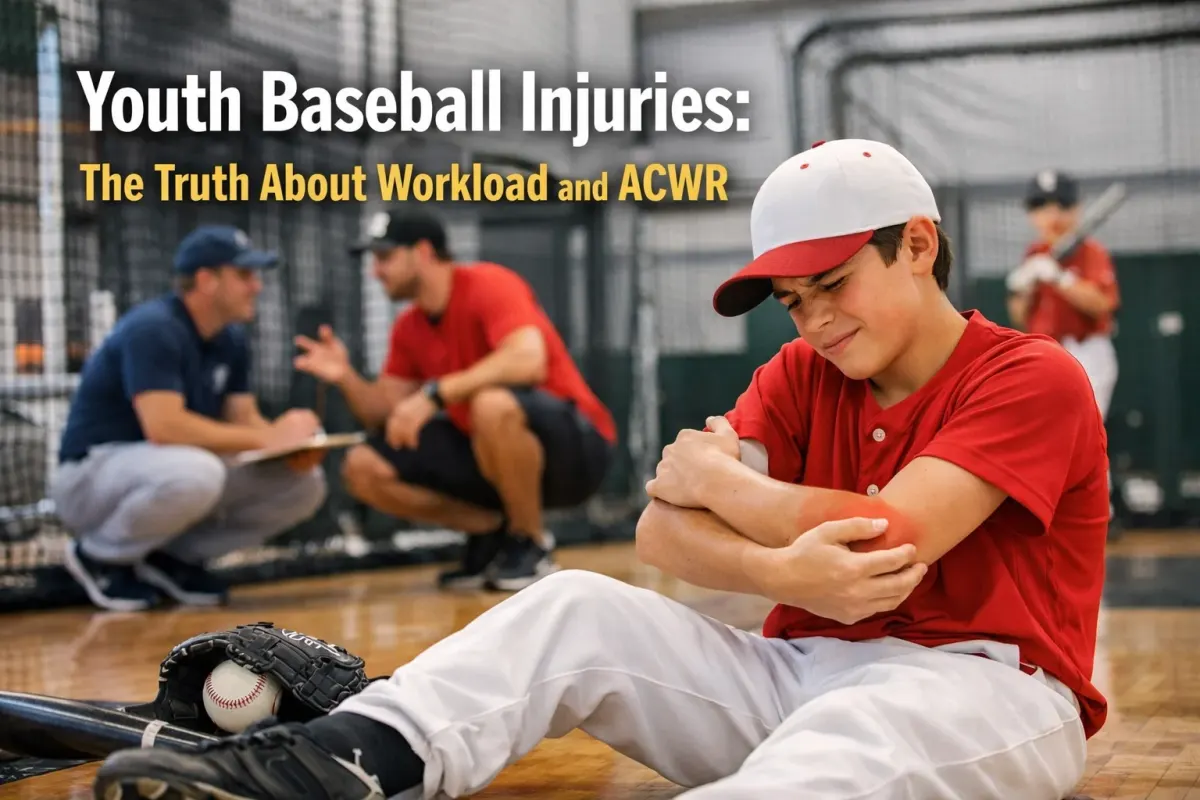
Does your son complain about a "heavy" arm after a Saturday double-header? Do you find yourself second-guessing every extra inning he pitches, wondering if that slight wince after a fastball is just "part of the game" or the start of a season-ending injury?
If you’re a parent or coach in the youth baseball world today, you’re likely feeling the pressure. The culture of travel ball often feels like a race to the bottom, more games, more tournaments, and more velocity, often at the expense of a young athlete's health.
In my view, we are currently facing a preventable injury crisis in youth baseball. We have better technology and more data than ever before, yet kids are still ending up on the operating table: Tommy John surgery is most common in 15- to 19-year-olds, and rates in that age group have been rising (Erickson et al., 2015). Why? Because we’re ignoring the most important metric in the sport: Workload.
Today, we’re going to pull back the curtain on why fatigue is the ultimate enemy and how a specific metric called the Acute-to-Chronic Workload Ratio (ACWR) can be the difference between a record-breaking season and a year spent in physical therapy.
The "Fatigue Cascade": Why It's Not Just About Pitch Counts
We’ve all heard of pitch counts. They’re the industry standard for a reason. But here’s the cold, hard truth: in one multicenter study, 89% of high school pitchers had at least one violation of Pitch Smart guidelines across the off-season and season (Erickson et al., 2023).
Even when we follow pitch counts to the letter, kids still get hurt. This is because pitch counts only tell a fraction of the story. They don't account for the intensity of the throws, the stress of the situation, or the "invisible" workload of long toss, bullpen sessions, and playing shortstop on your off-days.
Research has shown that adolescent pitchers who regularly pitched with arm fatigue were about 36 times more likely to be in the group that needed shoulder or elbow surgery (Olsen et al., 2006). Think about that. We aren't just talking about a slightly higher risk; we are talking about a total breakdown of the body’s protective mechanisms.
"Fatigue leads to kinematic changes (how the body moves), which lead to kinetic changes (the forces applied to the joints), which eventually result in injury. It’s a domino effect that starts long before the pain does."
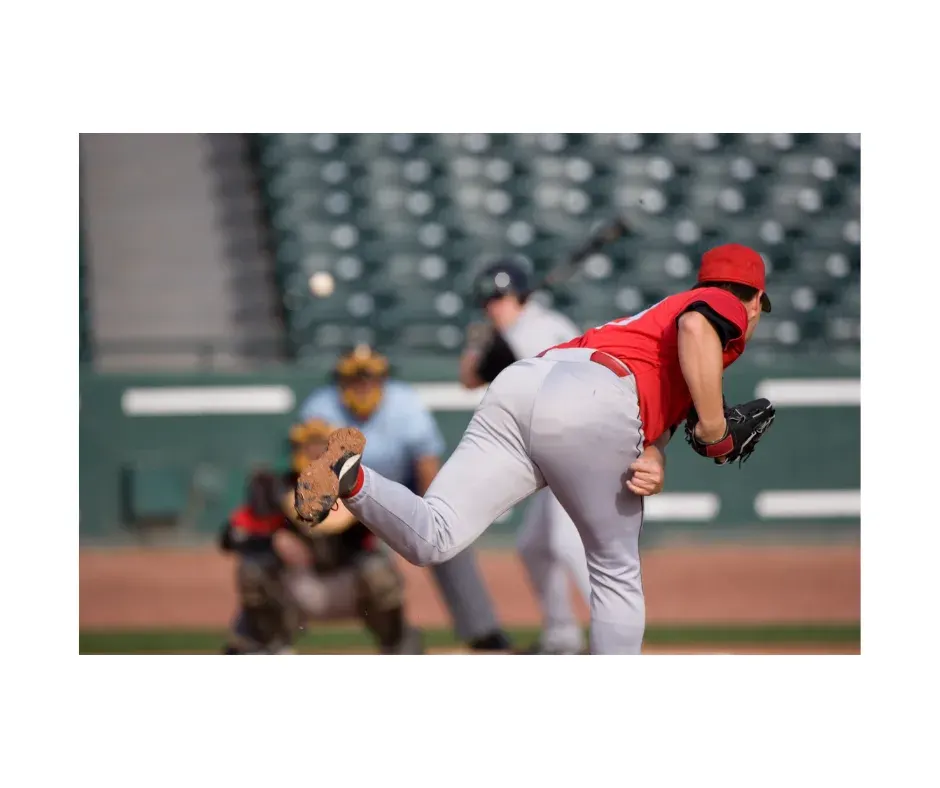
Understanding ACWR: The Magic Number is 1.27
If you want to protect your athlete, you need to understand the Acute-to-Chronic Workload Ratio (ACWR). It sounds technical, but it’s actually a very simple way to see if you’re asking a kid to do "too much, too soon."
- Acute Workload: This is the amount of throwing done in a short period (typically the last 7 days).
- Chronic Workload: This is the average amount of throwing done over a longer period (typically the last 4 weeks).
The ACWR is the ratio between the two. One small study of 18 high school varsity players, using a sensor sleeve to measure elbow stress, found that throwing injuries were about 15 times more likely when the workload ratio was above 1.27 (Mehta, 2019).
Essentially, if a kid has been taking it easy for a month and then suddenly throws 90 pitches in a high-stakes tournament game, their acute load is way higher than their chronic base. This "spike" in workload is where the ulnar collateral ligament (UCL) and the labrum are most vulnerable.
The Danger of Year-Round Specialization
In my view, the single biggest risk factor for youth arm injuries is year-round play. The human body: especially one that is still growing: is not designed to throw a baseball 12 months a year.
MLB Pitch Smart recommends at least four months off from competitive pitching every year, including at least 2-3 continuous months off from all overhead throwing (MLB Pitch Smart). This doesn't mean they stop being athletes; it means they play basketball, soccer, or focus on general strength and conditioning.
Early specialization might seem like the fast track to a college scholarship, but it’s often the fastest track to burnout and injury. Multi-sport participation builds balanced athleticism and gives those repetitive-motion muscles in the shoulder a chance to recover.
How Muscle Activation Technique (MAT) Changes the Game
When we talk about workload, we have to talk about how the body handles that stress. At Major League Activation LLC, we don't just look at the arm; we look at the entire system.
Every time a player throws, their muscles are supposed to "fire" in a specific sequence to protect the joints. However, when a player is overloaded or fatigued, some muscles might "shut down" or become less efficient. This is where compensation patterns start. The body is smart: it will find a way to make the throw, but it will use the "wrong" muscles or put excessive stress on the ligaments to do it.
Muscle Activation Technique (MAT) is our primary tool for addressing this. MAT is not about stretching. In fact, if a muscle is "weak" or not firing correctly, stretching can actually make the problem worse by increasing instability.
Instead, MAT focuses on:
- Assessing: Finding which muscles aren't communicating properly with the nervous system.
- Correcting: Using specific manual techniques to "jumpstart" those muscles.
- Reinforcing: Helping the body handle the workload without reverting to dangerous compensation patterns.
By improving muscle function, we aim to increase a player’s range of motion and performance because the body no longer feels the need to "tighten up" as a survival mechanism.
Learn more about our full range of services at Major League Activation.
Actionable Steps for Parents and Coaches
You don't need a PhD in biomechanics to start protecting your players today. Here are the most effective strategies you can implement right now:
- Track Everything: Don't just count game pitches. Track bullpen sessions and high-intensity practices. To make this easy, we highly recommend using The Diamond Arm Lab app. It takes the guesswork out of workload management and helps you monitor that crucial ACWR.
- Monitor "The Heavy Arm": If a player says their arm feels "heavy" or "dead," that is a major red flag. This is the body’s way of signaling that it has reached its capacity. Do not push through it.
- Implement a 30-Second Check: Before every game, have your athlete perform simple shoulder internal and external rotation checks. If they feel a significant loss in range of motion compared to their baseline, they are likely fatigued and at higher risk for injury.
- Focus on the Foundation: Injury prevention starts in the legs and core. If the lower body is weak, the arm has to do more work.

The Diamond Arm Lab: Your Best Defense
If you are serious about your child's long-term health and performance, you need a system. We developed The Diamond Arm Lab specifically to help families and coaches manage throwing workload.
The app doesn't just track pitches; it includes a daily arm-health check-in, tracks workload trends, and provides you with the data needed to have informed conversations with coaches. It allows you to see the "spikes" in workload as they happen.
When you combine the data-driven insights of the app with the physiological corrections of our Shoulder Care programs and MAT, you’re giving your athlete the best possible chance to succeed.
Check out The Diamond Arm Lab here.
Final Thoughts: Play the Long Game
In youth baseball, the "long game" is the only game that matters. A championship trophy at age 12 isn't worth a surgery at age 16. By watching for sudden spikes in workload, allowing for proper rest, and supporting proper muscle activation through MAT, we can help keep these kids on the field and off the sidelines.
If you’re noticing signs of fatigue, persistent soreness, or a drop in performance, don't wait for it to "fix itself." Let's get to the root of the problem.
Call or text (360) 836-0107 to set up a time.
Whether you need a full assessment or just some guidance on workload management, we’re here to help you navigate the season safely. You can also explore our digital resources and full range of services to get started on a better path today.
Individual results vary. This article is for educational purposes and is not medical advice. Talk with a qualified medical professional about your specific situation.